Analytical Brief by Lakshya Rohilla
YPP Research Analyst, Tessera Institute for Global Affairs
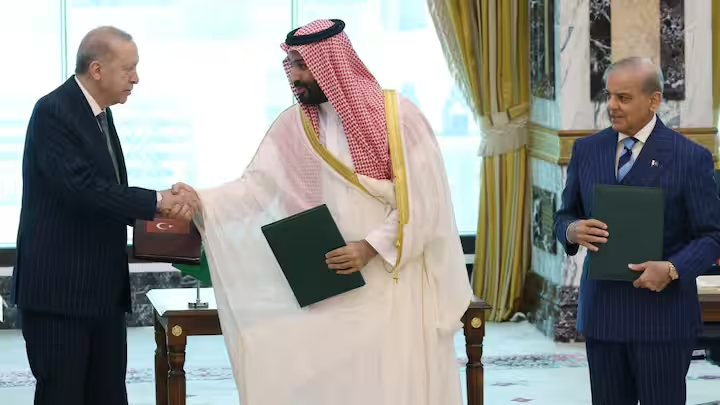
On August 7, 2026, Saudi Arabia, Türkiye, and Pakistan, signed the tripartite Mecca Joint Defense Agreement, establishing a new trilateral security and defense framework amid growing regional instability and uncertainty across West Asia and the Gulf. Signed in Mecca by Saudi Crown Prince Mohammed Bin Salman, Turkish President Recep Tyep Erdogan, and Pakistani Prime Minister Shehbaz Sharif, the agreement stipulates that an attack on one nation would constitute an attack on all, thus intended to strengthen collective deterrence and deepen the defense and security cooperation among the three nations. While the precise operational and technical details and mechanisms of the pact are unclear, it represents a significant development in regional security dynamics, and potentially worrisome consequences for key regional actors such as Iran, Israel, and India, and other Gulf nations who are looking to diversify their security and defence partnerships from the United States.
The timing of the agreement is particularly significant given the current conflict in Iran and the economic and supply chain constraints stemming from said conflict. For Riyadh, this agreement presents the opportunity to diversify its security partnerships and reduce reliance on any one single nation. Furthermore, the recent Houthi attacks, along with the threat of Iran and volatility around the Strait of Hormuz and Bab el Mandeb, have left the Kingdom increasingly vulnerable, thus resulting in a need to strengthen its security and defense apparatus. Pakistan seeks external bailouts, leverage against India, and a convenient distraction from its internal issues in Balochistan, Khyber Pakhtunkhwa, etc. Moreover, Islamabad may view this collective security agreement as insurance in the event of an active armed conflict on either side of its borders, while also strengthening its pre-existing deep security and defence ties with Ankara. Türkiye meanwhile gets the opportunity to increase its presence in West Asia, with direct access to Riyadh’s financial capital and Islamabad’s military. Additionally, Ankara gets greater market access and opportunities for its military technology and defense equipment, and manages operational and strategic autonomy by hedging against its dependency and relationships with fellow NATO allies.
The timing of the agreement is particularly significant given the current conflict in Iran and the economic and supply chain constraints stemming from said conflict. For Riyadh, this agreement presents the opportunity to diversify its security partnerships and reduce reliance on any one single nation. Furthermore, the recent Houthi attacks, along with the threat of Iran and volatility around the Strait of Hormuz and Bab el Mandeb, have left the Kingdom increasingly vulnerable, thus resulting in a need to strengthen its security and defense apparatus. Pakistan seeks external bailouts, leverage against India, and a convenient distraction from its internal issues in Balochistan, Khyber Pakhtunkhwa, etc. Moreover, Islamabad may view this collective security agreement as insurance in the event of an active armed conflict on either side of its borders, while also strengthening its pre-existing deep security and defence ties with Ankara. Türkiye meanwhile gets the opportunity to increase its presence in West Asia, with direct access to Riyadh’s financial capital and Islamabad’s military. Additionally, Ankara gets greater market access and opportunities for its military technology and defense equipment, and manages operational and strategic autonomy by hedging against its dependency and relationships with fellow NATO allies.
While this pact is not targeted towards any particular nation or group of nations, India must be wary and cautious of this latest development, and study the pact in detail to understand and evaluate the constraints and challenges that could arise as a result. The Ministry of External Affairs’ initial response to this agreement was that the government is examining the implications of this agreement from the perspective of India’s national security and regional stability. However, given New Delhi’s foreign policy status and its surface level relationships with the relevant nations and its national security threats, Pakistan seems to be the foremost threat for New Delhi from this agreement. While India has clearly highlighted zero tolerance for cross border terrorism, and has given a befitting reply to the Pakistanis, be it through the Surgical Strikes inside Pakistan Occupied Kashmir in 2016, Balakot airstrikes in 2019, and most recently Operation Sindoor in May 2025 where Indian Air Force targeted terrorist camps and infrastructure across the Line of Control (LOC) and the International Border. While New Delhi has shown its ability to handle the Pakistanis, this pact could slightly complicate things. For example, the potential increase in funding and access to prospective funds to Islamabad through Riyadh could embolden the Pakistanis to increase its procurement of weapons and military infrastructure. Moreover, Islamabad might also get access to the latest Turkish drones, weapons, and support, as was witnessed during Operation Sindoor. As such, New Delhi must tread carefully and take such factors into account while building its own deterrence and safeguards against the potential consequences and second and third order effects of this agreement.
Secondly, this serves as a reality check to the Indian government and the MEA. While New Delhi, especially under the Modi government, has made great strides in building a multifaceted strategic relationship with multiple Gulf Nations (including Saudi Arabia), there are still limitations, and the strong and friendly relations does not mean that Gulf Nations like Saudi Arabia will not pursue their own interests (even if that includes strengthening relations with nations like Pakistan). While I see no reason to panic, given the deepening economic relationship between New Delhi and Riyadh, the Indian government must continue to demand specific and clear instructions and details from the Saudis about whether this pact applies to India and, if tomorrow, if another active conflict between India and Pakistan were to resume, would Riyadh come to Islamabad’s support.
At the end of the day, the only way is through. In 1947, after its independence, the Indian government led by Prime Minister Nehru chose a very specific and particular foreign policy doctrine of strategic autonomy and the Non Aligned (now often described as multialigned) Movement; maintaining relations with everyone and avoiding joining formal alliances. New Delhi must continue to build up its own indigenous defense and military capabilities, while at the same time deepening its relations with nations like Israel and the UAE (both of whom share friendly relations with one another), especially in key domains such as intelligence sharing and coordination, military, defense, and technology. Moreover, New Delhi must strengthen its own defense capabilities and be more belligerent in its indigenous defense and weapons production, while also developing its strategic narrative communication methods and capabilities and continue building and deepening bilateral relations with other regional actors on its own terms to counter the potentially growing influence and interest in these accords.