Op-Ed by Kaylee Mat, Research Associate
A Quiet Freeze With Loud Implications
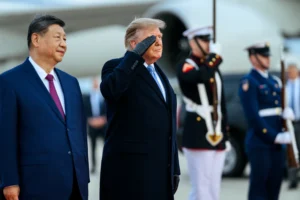
In late May of this year, the United States paused its participation in the Permanent Joint Board on Defence (PJBD) with Canada, citing Ottawa’s lagging military spending as the main reason. Established in 1940, the PJBD has historically served as a high-level advisory body—it aligns senior civilian and military representatives from both countries on strategic defense priorities, continental security, Arctic issues, critical infrastructure, military modernization, and emerging threats. Most immediate commentary has focused on the diplomatic friction of this freeze, yet very few have examined Canada’s isolation from early-stage U.S. strategic planning circles as Ottawa attempts to pivot toward independent middle-power alliances.
Diversifying Without Deploying
The institutional freeze signals an urgent need for Canada to catch up on its lagging defense timeline for critical continental mega-projects, several of which are already years behind schedule. Notably, the Canadian Patrol Submarine Project to replace the aging Victoria-class fleet remains under review, with no physical deployment expected until the late 2030s or early 2040s.
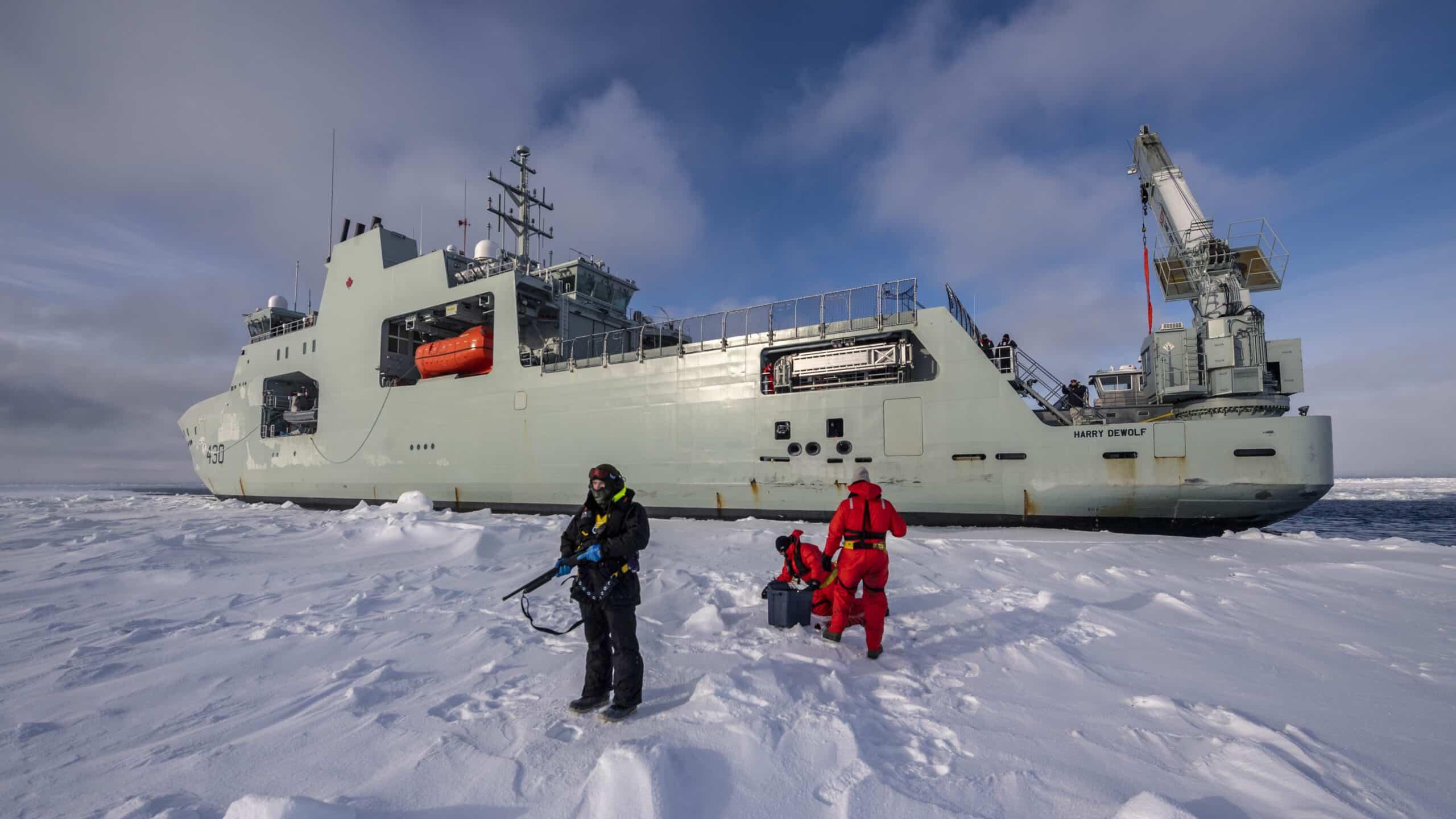
To mitigate this vulnerability and reduce its structural reliance on Washington, Ottawa has been diversifying its military procurement by turning to European and Indo-Pacific partners, including Sweden’s GlobalEye platform and South Korea’s Hanwha submarine program. Simultaneously, Ottawa is backing the proposed multilateral Defence, Security, and Resilience Bank (DSRB), for which Montréal is bidding to host the headquarters, and has reached NATO’s 2 percent GDP defense-spending target partly through direct capital allocations and financial backing of defence-related institutions. Yet this reliance on balance-sheet metrics and offshore procurement cannot overcome the uncomfortable reality of a massive, shared border with the United States. Ottawa’s strategy directly clashes with Washington’s demand for ready forces, usable munitions, and resilient logistics and command structures that work at scale under stress. By substituting financial engineering for physical deployment, Canada risks losing its footing in the Arctic, which could ultimately erode Ottawa’s capacity to assert sovereignty over its own northern waters.
The Procurement Pileup
On average, Canada’s military mega-projects run years behind schedule despite consistent government commitment to deployment. The River-class Destroyer Project (formerly the Canadian Surface Combatant (CSC) project) began full-rate production in April 2025, but first delivery is not anticipated until the early 2030s, with final delivery of the full fleet by 2050. The F-35 fighter jet integration plan is now also in question: Ottawa has been reconsidering its F-35 purchase since March 2025, and that review remains unresolved. Although the F-35 deal could simply be diluted by a mixed-fleet procurement rather than cancelled outright, either outcome would likely cause another major delay to this critical mega-project. Canada is diversifying its foreign weapons supply chain, but its Arctic defense remains tightly linked to U.S. systems, and a departure from U.S. equipment could create gaps in data-sharing, secure communication, and software links. In response, U.S. Ambassador Pete Hoekstra warned that NORAD cooperation could be “altered” if Canada cancels the F-35 deal. Taken together with the timing of the USMCA review and Washington’s repeated claim of Canadian under-spending, the PJBD pause looks less like a routine freeze and more like a political tactic pressuring Canada to reconsider its pursuit of procurement sovereignty.
What Money Can’t Buy
The DSRB addresses the financial bottleneck in procurement, not the decision-making and delivery bottleneck. It is also not yet an operating institution: charter negotiations concluded in Montréal in April 2026, and Canada and eight partner countries declared their intention to establish the bank at the 2026 NATO Summit in Ankara. As designed, the DSRB would raise funds in global markets, issuing AAA-rated bonds backed by member-country guarantees and lending cheaply and long-term to governments and defense firms. While this promises cheaper, faster financing for Canadian military firms and suppliers, it would not fix the delayed deployment process that constantly undermines Canadian military capability. Nor would it change Canada’s standing in continental missile defence: Ottawa shares early-warning data through NORAD but has never joined U.S. ballistic missile defence, leaving intercept decisions to U.S. Northern Command, and the proposed Golden Dome, with its space-based interceptors, would deepen that dependence rather than resolve it. Some critics argue that close Canada-U.S. military integration creates political and bureaucratic vulnerabilities for Canadian sovereignty. Other commentary argues that managing supply-chain dependence through consolidated partnerships and system integration that enables life-cycle governance is the key to protecting Canada’s sovereignty. Most existing commentary emphasizes the potential benefits of procurement diversification but neglects the bureaucratic constraints that slow procurement itself: Canada’s Arctic Over-the-Horizon Radar (A-OTHR), acquired from Australia, is expected to deliver only an initial capability by December 2029, with full operationalization anticipated by 2043, while Germany’s TKMS was only recently chosen as Canada’s preferred submarine supplier.
Building a Nordic Safety Net
If the procurement delays continue, Canada will be unable to uphold its bilateral defense obligations in the Arctic, giving the U.S. a strong national security rationale to patrol Canadian airspace and Arctic waters itself. Canada is currently trying to bridge this short-term capability gap by building targeted Nordic partnerships with Denmark, Finland, Iceland, Norway, and Sweden for enhanced surveillance cooperation, and with NATO allies more broadly for AI, space technologies, and resilient supply chains. Although these partnerships may cover some defense gaps, shared surveillance intelligence is not a sovereign capability, and such partnerships shift with each partner country’s changing priorities and geopolitical position. Nevertheless, Canada is following through on its middle-power deterrence strategy, widening Arctic defense into a shared exposure and shared agency with the Nordic states.
Beyond Paper Sovereignty
The central question is how fast Canada can build sovereign military capability without leaning solely on financial accountancy and shared-intelligence partnerships to meet its defense needs. If Canada wants to genuinely protect its Arctic territory, it must address its industrial capacity and separate economic benefit from procurement decision-making. Rethinking defense strategy as risk-taking capability development is the necessary next step in reforming the procurement system. The DSRB and any parallel defense investment authority can only solve the financial and authority problems. It cannot solve the industrial capacity problem.
References
Canadian Global Affairs Institute. (2024, December). The Canadian Patrol Submarine Project (CPSP) and its geopolitical implications [Briefing note]. https://www.cgai.ca/bn_the_canadian_patrol_submarine_project_cpsp
CBC News. (2025, March 14). Canada reconsidering F-35 purchase amid tensions with Washington, says minister. https://www.cbc.ca/news/politics/f35-blair-trump-1.7484477
CBC News. (2026, June 27). NORAD would be “altered” if Canada doesn’t buy F-35 jets, warns U.S. ambassador. https://www.cbc.ca/news/politics/norad-canada-us-f35-9.7059800
CBC News. (2026, July 6). Carney chooses German submarines as “best platform and partnership” for Canada. https://www.cbc.ca/news/politics/submarines-germany-canada-norway-south-korea-9.7259709
Centre for International and Defence Policy. (2026, April 16). Military-to-military ties and the future of Canada-U.S. security cooperation (Policy Brief Vol. 11, No. 2). Queen’s University. https://www.queensu.ca/cidp/military-military-ties-and-future-canada-us-security-cooperation
CP24. (2026, June 22). Canada, Australia formalize deal for Arctic radar system. https://www.cp24.com/news/canada/2026/06/22/canada-australia-formalize-deal-for-arctic-radar-system/
DefenseMirror. (2026, February 17). Denmark signs defense cooperation agreement with Canada, Greenland. https://defensemirror.com/news/41118
Department of National Defence. (2025, October 3). River-class Destroyer Project. Government of Canada. https://www.canada.ca/en/department-national-defence/services/procurement/canadian-surface-combatant.html
Department of National Defence. (2025, December 1). Arctic Over the Horizon Radar (NORAD modernization). Defence Capabilities Blueprint, Government of Canada. https://apps.forces.gc.ca/en/defence-capabilities-blueprint/project-details.asp?id=1004
Glesby, N. (2025, December 17). Canada’s Arctic Over-the-Horizon Radar: Early-warning for the defence of North America? [Policy primer]. North American and Arctic Defence and Security Network. https://www.naadsn.ca/wp-content/uploads/2025/12/25-dec-Canadas-Arctic-Over-the-Horizon-Radar-Policy_Primer-NG-Final.pdf
Global Affairs Canada. (2026, May 22). Joint statement on Arctic security from the Arctic Allies: Canada, the Kingdom of Denmark including Greenland and the Faroe Islands, Finland, Iceland, Norway, Sweden, and the United States of America. https://www.canada.ca/en/global-affairs/news/2026/05/joint-statement-on-arctic-security-from-the-arctic-allies-canada-the-kingdom-of-denmark-including-greenland-and-the-faroe-islands-finland-iceland-n.html
Hernandez-Roy, C. (2026, June 10). Canada and America are drifting apart: The Pentagon just made it official. The Walrus. https://thewalrus.ca/canada-and-america-are-drifting-apart-the-pentagon-just-made-it-official/
Hiebert, K. V. (2026, June 15). Ottawa wants to build a war machine. The Walrus. https://thewalrus.ca/ottawa-wants-to-build-a-war-machine/
KPMG Canada. (2026, May). Redefining defence financing. https://kpmg.com/ca/en/insights/2026/05/redefining-defence-financing.html
Lincoln, D. (2026, April 23). Middle power deterrence: The strategic case for a Canada-Nordic defence and governance alliance to ensure a 21st century Pax Arctica. The Arctic Institute. https://www.thearcticinstitute.org/middle-power-deterrence-strategic-case-canada-nordic-defence-and-governance-alliance-ensure-21st-century-pax-arctica/
Montréal International. (2026, February 3). Defence and security: Montréal brings it all together for the DSR Bank. https://www.montrealinternational.com/en/news/defence-and-security-montreal-brings-it-all-together-for-the-dsr-bank/
Nadarajah, H. (2026, March 24). Advancing Arctic sovereignty through Indo-Pacific defence partnerships. Policy Magazine. https://www.policymagazine.ca/advancing-arctic-sovereignty-through-indo-pacific-defence-partnerships/
Prime Minister of Canada. (2026, March 15). Prime Minister Carney deepens cooperation with Nordic countries on defence [Press release]. https://www.pm.gc.ca/en/news/news-releases/2026/03/15/prime-minister-carney-deepens-cooperation-nordic-countries-defence
Prime Minister of Canada. (2026, May 27). Prime Minister Carney announces major new defence partnership as part of new initiatives to transform Canadian defence procurement [Press release]. https://www.pm.gc.ca/en/news/news-releases/2026/05/27/prime-minister-carney-announces-major-new-defence-partnership-part
Prime Minister of Canada. (2026, July 7). Eight countries commit to supporting the Canada-led Defence, Security and Resilience Bank [Press release]. https://www.pm.gc.ca/en/news/news-releases/2026/07/07/eight-countries-commit-supporting-canada-led-defence-security-and
Prime Minister of Canada. (2026, July 8). Prime Minister Carney secures new defence partnerships at 2026 NATO Summit [Press release]. https://www.pm.gc.ca/en/news/news-releases/2026/07/08/prime-minister-carney-secures-new-defence-partnerships-2026-nato
West, J., & Barrett, K. (2025, July 22). Fact sheet: The Golden Dome and Canada. Canadian Centre for Policy Alternatives. https://www.policyalternatives.ca/news-research/fact-sheet-golden-dome-and-canada/
All views and potential mistakes belong to the author.