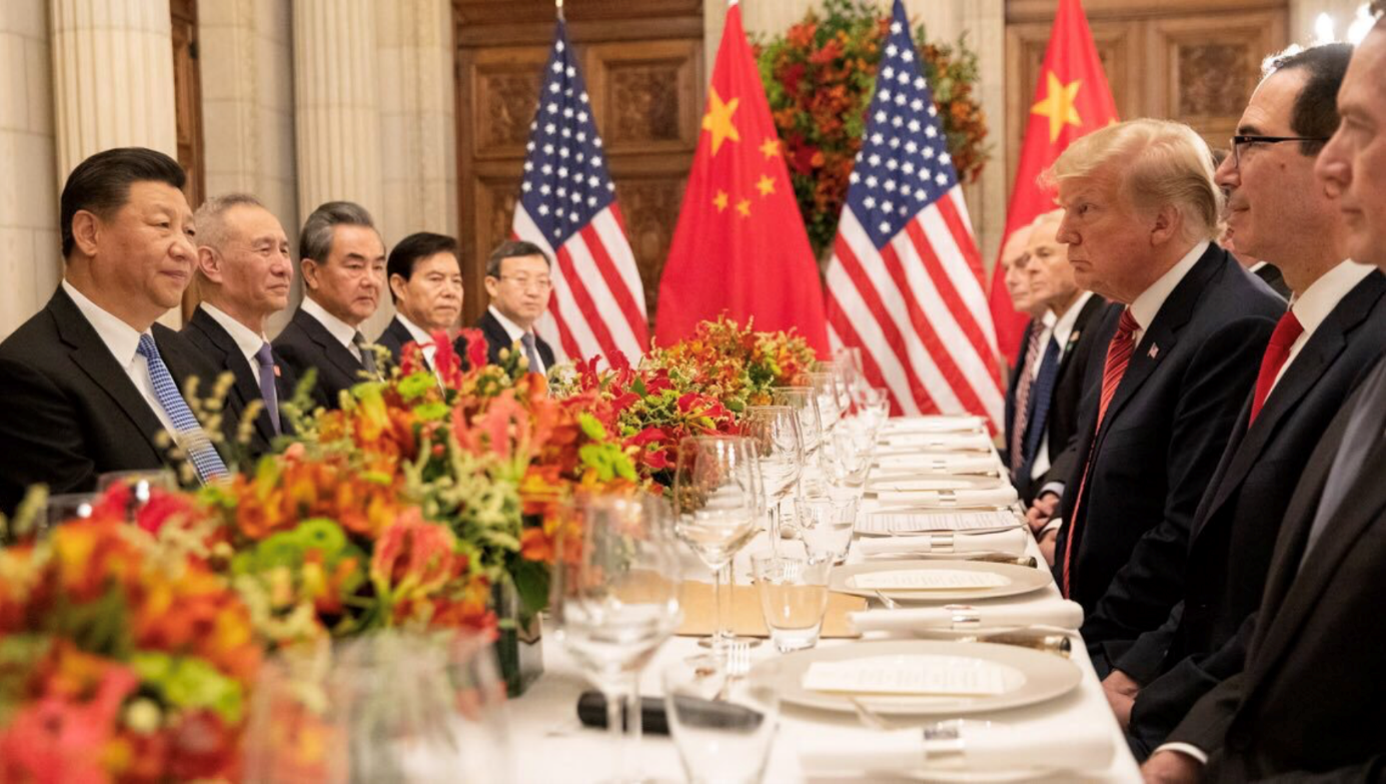
Trump–Xi bilateral dinner/meeting at the G20 Summit in Buenos Aires, Argentina, on December 1, 2018
By: Toni Meier, a European Law master’s student at Maastricht University and a keen observer of international conflict and cooperation. Ms. Meier holds an Honours bachelor’s degree in political science and international Relations from the University of Toronto.
The views expressed are those of the author and do not necessarily reflect the official position of Tessera Research Collective, its staff, fellows, or affiliates.
In today’s age, tension and hostility have been brewing between the world’s two largest superpowers – the United States and China: a conflict commonly called the “Trade War.” This conflict has been significant in the effect it has had on not only both nations but also the global economy as a whole. America has seen political turmoil, accompanied by job losses, over $1 trillion in companies’ stock prices being lost, as well as a trade deficit of up to $900 billion (Hass 2020 and Smith et al 2025). Whilst President Trump campaigned for his second term on the premise of ending trade imbalances, his efforts almost exclusively relied on ramping up tensions and competition through belligerent tariffs. Despite recent negotiations with China having led to a 10% decrease in tariffs on Chinese imports and a so-called one-year “truce” (White House 2025), an end to economic competition and hostility still seems far on the horizon.
In short, the competition and hostility between the world’s two largest economies have been unsuccessful on both sides, producing economic tensions and losses. Despite recent developments such as an apparent, year-long truce recently negotiated in South Korea in October (Hunnicutt 2025), trade relations still are widely regarded as fragile, if not dangerously frail (Murray 2025). In light of a potential continuation of these tensions, the pertinent question remains: if rational economic theory predicts states to act only in their own economic interest and the continued trade competition is harming America more than helping it, why does it engage in an irrational conflict that seems doomed to fail from the start? Economic warfare is rarely a purely numbers-driven, rational process. Economic decisions are influenced by ideological elements in addition to economic interests. In order to better understand the origin of this conflict and decision makers’ motivations, I aim to understand the psychological groundings of these tensions. More concretely, I examine how in-group and out-group mentalities, as well as inflated threat perception, underpin the portrayal of the opposing nation in American rhetoric, and how this informs their hostile actions, paying special attention to national chauvinism and the perception of ideological resistance.
In addition to explaining the inadequacies of rational economic theory in understanding the nuances of the US-China Trade War and the need for psychology to explain this phenomenon, I will analyze a handful of official statements by US officials and national media outlets regarding relations with China and economic goals from 2018 to the present. This time frame accurately captures attitudes held from the beginning of the conflict to now. These statements and the quotes I will highlight confirm my theory and highlight how this sentiment easily carries over into the popular media. There is, in fact, evidence of emotionally charged, vilifying language that reflects antagonistic identity framing and American superiority.
Research has shown raised levels of aggressive language and rhetoric that confirm an increased involvement of negative emotions in connotation with China. This has led to my belief that American officials – and in extension the American media and population – share the belief that China is fundamentally, irreversibly opposed to them ideologically, and that the United States ought to defend their place as the economically superior nation at the head of the international order. These factors will confound and result in an inflated perception of threat from across the Pacific and increased support for competition and conflict.
If proven, these findings would reduce the chances of negotiations between the nations due to diminished trust. Nationalist attitudes may alienate potential allies outside of China, and the opposition between the two superpowers may even lead to a cycle of reinforcing actions. In a global context, the decisions leading to the Trade War have and most likely will continue to undermine global growth, seeing as there are a variety of third-party states that are dependent on stable US-China trade relations. Additionally, said global, ideological polarization could lead to increased risk of conflict. Further, these findings highlight serious shortcomings in rationalist, economic assumptions about state behaviour, emphasizing the need for greater behavioural and psychological studies of economic events.
How Did We Get Here?
The generally accepted start of the US-China Trade War is the imposition of $34 billion worth of tariffs on Chinese goods by the Trump administration in 2018, despite economic conflict and international tension brewing for many years, if not decades prior. The economic tensions and increasing tariffs have been set up and perpetuated by President Trump during his first and second presidencies, but have been maintained under the Biden administration as well. These economic tensions have only intensified amidst the American social support of Hong Kong protesters and the COVID-19 pandemic. The Trade War has resulted in the closure of consulates and a diplomatic boycott of the 2022 Winter Olympics in Beijing, amongst many other effects. Such policies mainly included tariffs on Chinese imports, a ban on American investments in Chinese firms tied to the government, sanctions on policies in Hong Kong and Xinjiang, and a complete blacklisting of dozens of Chinese companies (Council on Foreign Relations 2024).
The US and China entered trade agreements in 1979, following a decades-long process of Chinese economic reform and liberalization after three decades of severed contact between Washington and communist Beijing, with China rejoining the predecessor of the World Trade Organization in December 2001 – committing to further economic reforms. There was hope that this represented an economic opportunity for America and the start of Chinese liberalization, thus leading to a substantial increase in trade of up to $400 billion of US imports from China in 2023. This resulted in the boosted purchasing power of the average US household, over a million supported industry jobs in the United States, and billions of dollars in revenue for American companies from sales in China (Hass 2020).
However, trade also resulted in mass manufacturing job losses, widespread worries about corporate and other espionage from Beijing, and concerns about subsidized, state-owned Chinese enterprises pushing American and other industries out of competitiveness. In response to these concerns, the US has responded with increasing assertiveness, coming to a head in the Trade War. President Trump withdrew the US from the Trans-Pacific Partnership and imposed billions of dollars worth of tariffs. President Biden has upheld these actions, whilst also introducing export controls restricting Beijing’s ability to gain advanced technology, and banning certain American investment in China. The way in which American officials have justified these responses, however, shows a different reasoning than just pure macroeconomics and rationality (Siripurapu and Berman 2024).
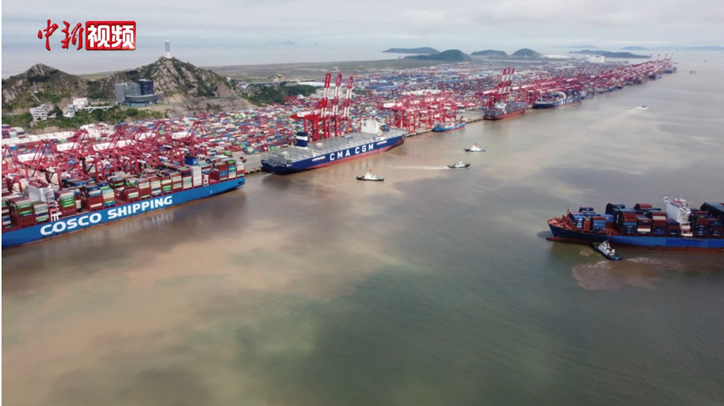
Ultimately, the trade conflict between the two nations is far from resolved. Whilst recent developments have led to a breakthrough in trade negotiations, with Trump agreeing to cut tariffs by 10% and Xi Jinping agreeing to halt the flow of fentanyl and pause export controls on rare earths, this so-called “one-year reprieve” is viewed skeptically by experts (Hunnicutt 2025). It seems that tensions are temporarily calmed, but not structurally reset. American decision makers have acted not entirely rationally in the past, and likely will continue to do so in the foreseeable future, which only further underscores the importance of understanding their psychological motivations.
The Shortcomings of Rational Economic Theory
International trade remains central to the global economy. In 2024 alone, the US made $199.3 billion in exports to China, and China profited by $461.4 billion through exports to America (Bureau of Economic Analysis). US consumers regularly benefit from access to a variety of products at significantly lower prices, and US producers profit from access to Chinese markets. Reports detail that exports to China supported over a million jobs for American labourers (The US-China Business Council 2023). So then why is it that the Director of National Security calls China “the greatest threat to America today” (Ratcliffe 2020)? There is a side to this conflict that cannot be easily explained by basic macroeconomics. Hence, it is imperative to understand the psychological forces behind this expansion and competition.
Generally speaking, economic competition is not a surprise, given that economic capabilities are among the core tenets of international power. The commonly accepted reason for the powerful disdain for American-Chinese trade can be found in widespread manufacturing job losses, and labour and human rights violations. Due to the vast low-wage Chinese workforce, a variety of American industries saw large-scale losses in competitiveness and hence employment. China is also facing criticism from the US for its poor working conditions and human rights abuses, most importantly against millions of Uyghurs and the freedom of Hong Kong (Council on Foreign Relations 2024). There are also growing concerns of industrial espionage, as an increasing number of people are being convicted of spying on and smuggling trade secrets (Yong 2023). This has led to outrage over a significant trade deficit and federal budget deficit, and the aim to prevent the economically driven growth of China’s military strength (Kapustina 2020, 5-6). The standard, widely accepted view of the economic conflict between the two largest superpowers is one of simple rationality, arguing that economic actors such as states will evaluate all information available to them and carefully choose a decision that allows them to maximize their profit and minimize their costs (Paulus 2024). However, both typical rational economic explanations and their state-level of analysis don’t do justice to the complexity of the US-China conflict.
The expectation of states being rational, utility-maximizing actors only scratches the surface of international relations and fails to account for the psychology behind the decisions of leaders, which fuel this economic competition. While state leaders strive to gain power, they are also more likely to engage in direct competition and see their competitors as threats through a variety of psychological factors. Rational power-seeking behaviour alone does not account for the strong negative emotions and resentment displayed in the course of this economic competition, both by politicians and the public. American actions have not been as utility-maximizing as is to be expected from a rational actor, going so far as to continuously seek and sustain economic conflict when it has been proven to harm more than help.
Scholars argue that tariffs are ineffective in reducing the trade imbalances that have been cited as the most common reason for their existence (Moosa 2020, 45-47), if not directly leading to slower productivity growth, less innovation, and lower living standards (Smith et al 2025). And still, President Trump campaigned for his second presidential term largely on the promise of enacting further tariffs in the hope of closing trade deficits with China, and has continued to insist on the efficacy of his strategy as well as the legitimacy of his goal to this day (Hunnitcutt 2025). All of this continued despite the proven harm it has done to American consumers and producers, directly leading to unprecedented manufacturing and freight transportation job losses, raised prices, frozen business investment and slowed economic growth, one of the largest tax increases in years, and US companies primarily paying for the tariffs at a cost of nearly $46 billion by 2020 alone (Hass 2020). US economic leaders have failed to de-escalate, even when mutual economic and financial harm became apparent.
The following usage of psychology in analyzing state behaviour in the context of the American-Chinese Trade War shifts the level of analysis largely from the state-level to the individual-level. While states are often understood as rational, utility-maximizing actors in and of themselves within international relations, the approach I am advocating for argues that political and economic decision makers are influenced by perceptions of identity and threat. This, in turn, directly influences state behaviour in addition to the commonly accepted factors of utility and rationality. It is important to note that these elite actors do not operate in isolation. National chauvinism, militant attitudes, and inflated threat perceptions also have an effect on the American public at large. This means that not only are public attitudes and media narratives influenced by these psychological phenomena, but they also reinforce the perceptions and environments within which elite decision makers operate. Hence, the psychology of major power competition helps to explain the factors that influenced American policymakers to escalate this Trade War beyond the rationally expected point.
Instead, the escalation of the US-China trade conflict beyond rational bounds can be best explained by a behavioural approach, focusing on the motivations and biases of state leaders making these non-rational decisions. This approach stresses the importance of attitudes of national chauvinism, higher perceived threats due to opposing identities, and hawkish attitudes fuelled by a belief of international strength. In short, international relations studies find that individuals may be more inclined to support international competition if they feel that their country is threatened by another nation. Subsequently, people may experience a skewed perception of threat if another country opposes theirs ideologically or challenges their perceived place in the world order.
In this case, officials may show higher support for competition with China – even if it may economically damage them. As a result, decision makers across the United States have come to view the economic threat China poses as larger and more damaging to the American economy than the numbers suggest, encouraging harsher foreign policy stances. In addition to skewed threat perceptions, Americans have been shown to exhibit hawkish attitudes. These attitudes can best be summarized as a belief that one’s own state is stronger than another, incentivizing militant internationalism and forceful international competition if not conflict (Pomeroy 2023). This psychological phenomenon commonly overpowers other dispositional or behavioural traits in international relations, which can commonly be observed in the behaviour of American leaders, as proven below.
The Psychology of Major Power Competition
The purpose of this paper is not to discredit rational economic theory or to imply that it is incorrect. Rather, I am arguing that rational explanations on their own fail to fully account for the nuances of this case. Psychology applied to the realm of international relations accounts for how state leaders interpret conflict and respond to strategic conditions. Elites still pursue state interests as argued for by rationalism, but behavioural factors influence what they perceive their interests to be and how they ought to approach them. Hence, the primary level of analysis consists of the individual/decision maker level. It is these individuals who are psychologically affected by the factors explained below, and it is these individuals also who lead state actions. Their perceptions and decisions are the ones that have led to the course the Trade War has taken. Secondarily, this rhetoric and hostility have also directly affected societal and public discourse. State elites – despite being the main focus of this paper – are not the only individuals influenced by the psychology of international relations. Publicly held nationalism and media rhetoric directly reinforce and legitimize the policy chosen by political and economic officials.
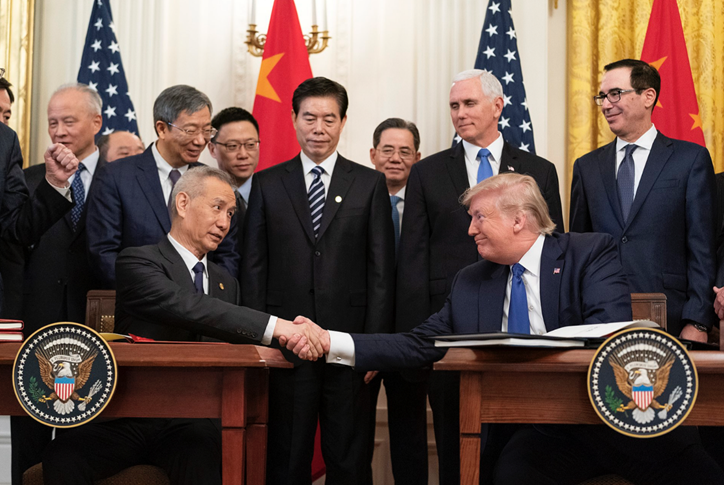
State leaders are less inclined to cooperate internationally and more inclined to perceive another state as a direct threat if they perceive themselves to have different, opposed identities (Rousseau 2007, 764). As states are socially categorized as separate identities, ideological differences are often made tangible inside individuals’ minds, and opposing states are quick to be categorized as an “other.” With a rival state dubbed an “other,” believed similarities and trust are quick to diminish, their actions are understood more negatively, and ultimately, cooperation becomes much more difficult. This alienation directly leads to larger perceived threats by this other nation, as behaviour is assessed much less objectively. This is where national chauvinism becomes relevant. In relevant literature, some nations are understood to be characterized by national chauvinism, and hence shown to consist of individuals who fundamentally believe their country to be superior and of higher status than others.
As a direct result, policy makers are more invested in maintaining this status and other nations rising in power become psychologically threatening, leading to increased support for international competition and conflict (Herrmann 2009, 729). Ultimately, these factors lead to an observed hawkishness, meaning that state leaders who perceive their country to be superior and stronger tend to favour confrontational foreign policy stances, favouring both militarism and competition over diplomacy (Pomeroy 2024, 89-90). Ultimately, this snowballing effect of opposed identity perceptions, larger perceived threat, national attitudes of superiority, and increased support for aggressive tactics leads to a non-rational escalation of international relations.
As policymakers frame attitudes of national exceptionalism and concerning threat narratives, these beliefs are reproduced and shared by the general public, which will also come to exhibit strong national chauvinism and hawkishness. This spreading national sentiment will not only normalize ideas advocated for by the state elite but will directly lead to their escalation, making for a sort of reinforcing cycle. While public and media discourse are not the primary level of analysis, as decision makers are of the highest interest in examining state behaviour, they offer an important perspective into the legitimation of hostility and escalation.
This contrasts with the typical rational explanation and helps to explain how actions are fuelled not only by a desire for power, but by a strong sentiment of competition and fear of an ideologically opposed aggressor. Officials operating in nationalist political environments, such as the United States, as will be demonstrated later on, are more likely to perceive others as threats and support aggressive tactics. Due to widespread support for a vision of an internationally superior America which leads the world order (see strongly held “America first” sentiment), US officials are far more likely to support international competition over cooperation.
Furthermore, this is only strengthened by a widespread perception of China as America’s natural opposition in the world order – more than likely due to lingering sentiments from the Cold War and fears of communism, leading to inflated perceptions of threat and support for conflict, leading to the creation of an in-group (United States) and an out-group (China). This explanation contrasts with the standard, rational explanation of the Trade War, supplying a deeper understanding of the motivations of the variety of American state officials who support excessive actions against China, as actors have escalated the trade competition beyond the rational. Such a scope runs the risk of oversimplifying complex state behaviour, which may be addressed by continued focus on systematic factors like strategic alliances or historical legacies.
An Overview of Textual Examples
The following is a short qualitative study of a variety of American state documents, statements made by economic and state leaders, and news coverage. In particular, I will be examining the language used – highlighting various quotes and phrases of interest – and what it reveals about the inner attitudes of the individual speaker (in this case, American political and economic leaders). Secondly, I will briefly analyze the attitudes of American media outlets, and through inference, the attitudes of American individuals that will be directly shaped by the statements of their leaders and news. The selection and analysis process is deductive rather than inductive. Cases were selected to test my theory, and due to the scope of this piece, examples are limited to a handful of speeches, published records, as well as news coverage. The timeframe will range from shortly before the official outbreak of the Trade War to recent developments and predictions in the media. These observations will be relevant to a deeper understanding of the motivations that directly influence the decisions made in this conflict, providing insight into both the reasons confrontational policy decisions were made and what justifications were given for hostile economic decisions, and what perspectives the public is being introduced to – likely directly influencing their support for said strategies.
Such a scope comes with considerable strengths and limitations. On one hand, a focus on government documents and media statements lends direct insight into how policymakers frame both China and the conflict as a whole, allowing us to identify their intentions and specific narratives. These sources may uncover how governments construct narratives around the ideas of national pride and superiority to legitimize their actions and influence domestic audiences. There is a variety of data available, allowing for a broad range of qualitative analysis. On the other hand, there will also be a lack of full transparency in released documents and official statements, perhaps not revealing true intentions behind decisions, and there exists a risk of overemphasizing official rhetoric. Nonetheless, such analysis will still reveal the existence of in-group and out-group mentalities, inflated threat perceptions, and national chauvinism coupled with a perceived ideological opposition.
If the aforementioned psychological reasoning is presumably applicable, we can expect to see this pattern of charged language reflected in the documents and speeches examined. We can expect to see China painted as a dangerous aggressor, with statements directly or indirectly encouraging economic actions beyond a rational threshold. There will most likely be iterations in which the US constitutes the most powerful and influential nation in the international economy, and as such should fight to maintain this position. Such patterns of emotional language can be expected amongst state documents, official statements, and even broad-ranging media, directly highlighting the patterns of thinking pushed onto the average American citizen. Aside from higher perceived threats caused by nationalist attitudes, we can also expect to see a pervasive sense of in-group and out-group mentality. Officials will frame the United States and its people as of the utmost importance, whose well-being is threatened by the ambitions of their counterpart, hence reinforcing support for conflict. Such a mentality would particularly be reflected in the recurring use of militant language and the continued assertion that the two nations are opposed on the international plane.
A Short Analysis and Examples
In focusing on the major Trade War between the two nations from 2018 to the present and analyzing the thoughts of key players and agencies, we see a significant use of ideologically-charged rhetoric – highlighting a perceived moral difference between the two nations and arguing China’s actions were aggressive and morally reprehensible. State documents, such as the National Security Strategy Brief, iterate that China seeks to “shape a world antithetical to US values and interests” (“National Security Strategy of the United States of America” 2017, 25). Whilst former US Trade Representatives mention economic concerns like the apparent trade deficit between the two nations, these concerns are dwarfed by appeals to emotion and rousing calls to action, such as rallying together to stop “the most comprehensive suit of mercantilist policies in global history” (“Testimony of Robert Lighthizer” 2023, 1-2). According to state documents, the US government is actively worried that China aims to “displace” them, thus expanding their international control through its state-driven economic model, aiming to spread its authoritarian influence through corruption and other militant tactics (“National Security Strategy of the United States of America” 2017, 25).
In reports by the Office of the US Trade Representative, the government outright calls the actions of China’s government illegal, unauthorized and theft (“2018 Special 301 Report” 2018, 44). To further reinforce the hostile personification of China, the President of the country himself has been giving speeches, calling Chinese actions “ripp[ing] off,” “raid[ing],” “gutt[ing],” and “violat[ing]” in one sentence alone (Trump 2020). This same ideology and aggressive rhetoric can be found in popular news media, using language as militant as “attacks,” “aggressive and targeted countermeasures,” and “dishing out pain” (Stevenson and Mozur 2024).
Media outlets are routinely updating American citizens on ongoing trade disagreements, portraying China and Chinese officials as “exploit[ative],” “escalating” and “forc[ing] negotiation[s],” and continuously pointing to the “hostilities” at play (Hawkins 2025). Such language may not be too alarming, but it is worth mentioning that a variety of news sources (including liberal media outlets) have come to use such language so commonly. As explained previously, whilst public perception does not directly dictate policy outcomes in the same way that attitudes held by officials do, it is nonetheless indicative of both the effect of elite framing of increased threats and national superiority on the American public, and the legitimation of the aggressive action taken.
Although there are few current scholarly studies on the psychological reasons for American actions in the Trade War, there is a defined understanding of the US’ protectionist policies stemming from nationalism to a non-negligible degree, and an attempt by American officials to make China appear as an “other.” There is a consensus that the US largely consists of economic nationalists, who see economic wealth as a zero-sum game, meaning that in order to succeed economically and prioritize their own nation, they must adopt protectionist measures that directly oppose the tenets of free trade and globalization. Additionally, the states’ actions are understood to be shaped by the ideologies of exceptionalism, encouraging support for a self-perceived superior status (Boylan 2020, 27-28). Others go so far as to argue that the Trade War is a direct consequence, not of trade deficits or Chinese subsidies to military-aiding industries, but rather of the US feeling threatened by China’s economic rise, endangering the American economic hegemony and superiority.
This effect is dubbed the Thucydides Trap amongst international conflict scholars (Moosa 2020, 49-51). Secondary research confirms that American actions have been directly influenced by national chauvinism and beliefs of superiority, as well as inflated threat perceptions due to a rise in Chinese economic power, where America once reigned supreme. These are true psychological factors, directly leading American policy makers and even citizens to support conflict and even an outright Trade War, as they feel challenged and threatened: ready to figuratively go to war to protect their place in the world order.
These perceptions amongst state leaders and the media are hardly subtle. The language used is charged, calling to defend a strong America and defeat an evil opponent. The standard explanation often used by American actors to justify their actions and beliefs falls short of explaining the powerful beliefs of those involved in the conflict. Understanding the impact of in-group, out-group mentalities, threat perceptions, and the building of a national identity, however, lends a deeper, more realistic understanding of how and why this economic conflict has spiralled to such heightened proportions. We can infer from the aforementioned statements that American officials believe the US and China to be fundamentally opposed planes with a chasm between them that cannot be rectified. This satisfies the clause of ideological opposition, which we know to increase support for conflict. Additionally, we see a significant degree of hawkishness and national chauvinism in the belief that the US is and should continue to be the strongest player in the world order, garnering support for competition over diplomacy.
Concluding Remarks
Ultimately, the US-China Trade War serves as an interesting case study for the limitations of rational economic understandings of international relations. The United States is further escalating a conflict beyond the rationally expected course of action, pointing to psychologically constructed ideological differences and self-perceived superiority, as well as strong emotional aversion to a believed threat. My analysis leads to the conclusion that such psychological preconceptions must have a non-negligible impact on decisions that otherwise, rationally speaking, should not have occurred. The exact extent of this impact remains to be determined and provides grounds for further investigation in the future.
Some potential shortcomings may exist in the limited scope of findings analyzed and access to data, seeing as I am only able to analyze beliefs and thoughts publicized and framed for public consumption. Any understanding of broader psychological factors is limited, such as the beliefs and influences of other stakeholders, like business leaders or lobbying groups. However, the results remain important for international relations theory and provide a realistic understanding of the ways in which individual and national attitudes frame policy perceptions, in this case, leading to the Trade War.
These findings are significant as they highlight the applicability of psychology to international relations and how decisions made in the real world are seldom as simple as argued for in rationalist thought. Realizing that the American decision to enter and sustain the Trade War was motivated by increased support for hawkish policies (caused by attitudes of national chauvinism and in-group, out-group beliefs) provides a more nuanced perspective on international conflict studies. We can see how behavioural approaches help to explain economic competition besides rationalist theory. We can now begin to understand where support for hostile economic tactics and conflict can arise, which attitudes may contribute to this, and how this cycle may even be reinforcing – an understanding crucial to the continued expansion of international relations theory.
Sources Used:
Boylan, Brandon M. McBeath, Jerry. Wang, Bo. (2021). “US-China Relations:
Nationalism, the Trade War, and COVID-19.” Fudan Journal of the Humanities and Social Sciences. 14(1), 23-40.
Bureau of Economic Analysis. “U.S. International Trade in Goods and Services: China.” U.S.
Department of Commerce. https://apps.bea.gov/international/factsheet/factsheet.html#650
Council on Foreign Relations. (2024). “U.S.-China
Relations.” https://www.cfr.org/timeline/us-china-relations
Hass, Ryan. Denmark, Abraham M. (2020). “More pain than gain: How the US-China trade
war hurt America.” Brookings. https://www.brookings.edu/articles/more-pain-than-gain-how-the-us-china-trade-war-hurt-america/
Hawkins, Amy. (2025). “Why has US-China trade war restarted and how have markets
reacted?” The Guardian. https://www.theguardian.com/world/2025/oct/13/why-us-china-trade-war-restarted-tariffs
Herrmann, R. K., Isernia, P., & Segatti, P. (2009). «Attachment to the nation and international
relations: Dimensions of identity and their relationship to war and peace.” Political psychology, 30(5), 721-754.
Hunnicutt, Trevor. (2025). «Trump shaves China tariffs in deal with Xi on fentanyl, rare
earths.” Reuters. https://www.reuters.com/world/china/looming-trump-xi-meeting-revives-hope-us-china-trade-truce-2025-10-29/
Kahneman, D. (2003). „Maps of bounded rationality: Psychology for behavioural
economics.” American economic review, 93(5), 1449-1475.
Kapustina, Larisa. Lipková, L’udmila. Silin, Yakov. Drevalev, Andrei. (2020). ”US-China
Trade War: Causes and Outcomes.” SHS Web of Conferences. 73(1), 1-13.
Moosa, Imad A. (2020). “The Thucydides Trap as an Alternative Explanation for the US-
China Trade War.” Global Journal of Emerging Market Economics. 12(1), 41-55.
Murray, Brendan. (2025). “US and China Head Into 2026 With a Fragile Trade Truce.”
Bloomberg. https://www.bloomberg.com/news/newsletters/2025-12-29/us-china-trade-truce?embedded-checkout=true
“National Security Strategy of the United States of America.” (2017).
https://trumpwhitehouse.archives.gov/wp-content/uploads/2017/12/NSS-Final-12-18-2017-0905.pdf
Paulus, Nathan. (2024). “Expert Insights on Rational Choice Theory.” University of
California, Riverside, School of Business. https://business.ucr.edu/news/2024/08/05/expert-insights-rational-choice-theory
Pomeroy, C. (2024). “Hawks become us: The sense of power and militant foreign policy
attitudes.” Security Studies, 33(1), 88-114.
Ratcliffe, John. (2020). “China Is National Security Threat No. 1.” The Wall Street Journal.
https://www.wsj.com/articles/china-is-national-security-threat-no-1-11607019599
Rathbun, B. C., Kertzer, J. D., & Paradis, M. (2017). “Homo diplomaticus: Mixed-method
evidence of variation in strategic rationality.” International organization, 71(S1), S33-S60.
Rousseau, D. L., & Garcia-Retamero, R. (2007). “Identity, power, and threat perception: A
cross-national experimental study.” Journal of conflict resolution, 51(5), 744-771.
Siripurapu. Anshu. Berman, Noah. (2024). “The Contentious U.S.-China Trade
Relationship.” Council on Foreign Relations. https://www.cfr.org/backgrounder/contentious-us-china-trade-relationship
Smith, Allison, Sheinberg, Ariel, McBride, James, et al. (2025). “The U.S. Trade Deficit:
How Much Does It Matter?” Council on Foreign Relations. https://www.cfr.org/backgrounder/us-trade-deficit-how-much-does-it-matter
Stevenson, Alexandra. Mozur, Paul. (2024). “China Has a New Playbook to Counter
Trump: ‘Supply Chian Warfare’.” The New York Times. https://www.nytimes.com/2024/11/27/business/china-retaliation-skydio.html
“Testimony of Robert Lighthizer Before the House Select Committee on Strategic
Competition between the Unites States and the Chines Communist Party.” (2023). https://selectcommitteeontheccp.house.gov/sites/evo-subsites/selectcommitteeontheccp.house.gov/files/evo-media-document/robert-lighthizer_china-committee-testimony_may-17_2023.pdf
The US-China Business Council. (2023). “US Exports to China.”
https://www.uschina.org/wp-content/uploads/2023/05/us_exports_to_china_2023_0.pdf
The White House. (2025). Whitehouse.gov
Trump, Donald. (2020). “Remarks by President Trump on Actions Against China.”
trumpwhitehouse.archive.gov.https://trumpwhitehouse.archives.gov/briefings-statements/remarks-president-trump-actions-china/
Yong, Nicholas. (2023). “Industrial espionage: How China sneaks out America’s technology
secrets.” BBC. https://www.bbc.com/news/world-asia-china-64206950