From Rescue Mission to What, Exactly? Part I
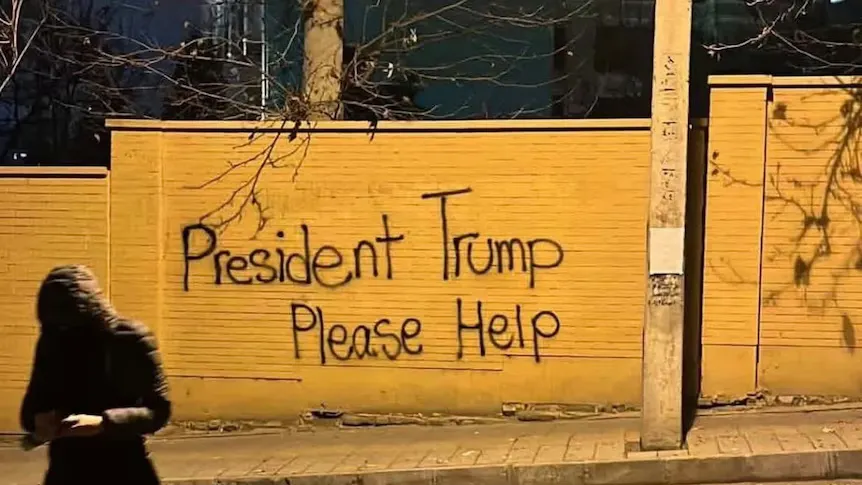
“Help is on its way,” said Trump as the Islamic Republic was massacring the protesters in January 2026 – a crackdown that by many accounts killed tens of thousands in two days. Weeks later, as American and Israeli aircraft struck Tehran, he told Iranians directly: “the hour of freedom is at hand.” More than three months later, the conflict has entered its bargaining phase. The items on the table are uranium enrichment, the Strait of Hormuz, regional conflict, and sanction relief. The gross violations of human rights are not.
Any account of the Iran war written now has to begin with humility. The situation is still unfolding. The public record is incomplete. Thousands of Iranians have been arrested on charges of treason since the start of the war and several have already been executed. Leaks may be self-serving, battlefield claims may be exaggerated, and reports about covert plans may later prove wrong, partial, or deliberately planted. In the fog of war, certainty is usually the first casualty.
But uncertainty does not mean silence, it means writing carefully.
Nevertheless, one clear trajectory is already visible. A war originally (partially) justified as a liberation of the Iranian populace has steadily devolved into a fully transactional negotiations with the remnants of the regime’s leadership. Trump’s subsequent declaration that regime change had already been “achieved” was a way to exit the liberation frame without admitting it had failed.
A Narrative Years in the Making
What made the early rescue rhetoric momentarily credible was not only the timing of the strikes following the January 2026 massacres in Iran. Israel had been constructing this narrative for years. Netanyahu had repeatedly addressed the Iranian people directly over the years, bypassing the regime, and presenting Israel not as Iran’s enemy but as the future partner of a liberated people. In 2018, he released a video offering Israeli water technology to Iranians amid drought and said Israel wanted to “help the Iranian people solve their water crisis”. In a later message during Iran’s water crisis, Netanyahu said he had opened a Farsi-language Telegram channel to teach water management to Iranians, and linked Iran’s “thirst for water” to its “thirst for freedom.”
In April 2023, less than a year after the Mahsa Amini uprising, Israel became the first state (Zelensky was next) to officially host Prince Reza Pahlavi (the exiled son of the last Shah). He arrived in Israel as a guest of Intelligence Minister Gila Gamliel, and met Netanyahu and President Herzog while there. In a joint press conference with Gamliel, Pahlavi said a future secular and democratic Iran could have amicable relations with Israel, and his own office said a democratic Iran would seek to re-establish ties with Israel and Arab neighbors.
In the 12-Days war in June 2025, Israeli strikes strikes targeted not only nuclear and military sites but also Evin Prison (Iran’s notorious Bastille) and the headquarters of the riot police, while Netanyahu addressed Iranians directly, urging them to “take to the streets,” “demand justice,” and “protest tyranny,” while saying that “soon your country will be free.” The message was consistent as Israel portrayed its conflict was with the regime, not the nation.
The Initial “Rescue” Phase
The war was probably coming anyway, as the unfinished continuation of the 12-Day War of June 2025. Many analysts expected another round later in the spring or summer, and Israeli officials were already speaking as if the next war was only a matter of weeks or months. But the January massacre, and Trump’s vow against killing the protesters, appear to have pulled the clock forward.
When the supreme leader, Ali Khamenei was targeted and Israeli drones began hitting Basij militia checkpoints across Tehran in the earlier days of war, the message was hard to miss. The Israeli military announced that it was targeting the forces that were behind the severe violence against the civilians and orchestrated the January 2026 massacre.
Simultaneously, in the early days of war Israeli strikes focused on the Iranian Western borders with Iraq where several thousands Iranian Kurdish militia take refuge in the mountains in the Iraqi Kurdistan. According to many reports the plan was to open their way into Iran.
For a brief window, a complex wave of emotion rippled through the country. The deep fear within the regime’s security ranks was palpable; from top-tier commanders to lower ranks realized they were no longer safe anywhere on the ground. Among large segments of the population, a feeling of jubilance took hold that they hit the streets to celebrate from Tehran to Toronto. Watching the assassination of Khamenei and the systematic burning of Basij checkpoints – the very symbols of their decades-long humiliation – many Iranians believed they would not be left to fight alone. The game, it seemed, had fundamentally changed.
But why devote so much early attention to the regime’s internal security apparatus (Basij checkpoints, police positions, and the machinery of domestic repression) when these forces posed no direct threat to Israeli or American aircraft?
One answer is that the strikes in Robert Jervis’s (political scientist) terms, functioned as costly signals. Words are cheap; striking the regime’s repressive machinery is not. By absorbing the diplomatic and military costs of hitting forces associated with the January crackdown, Israel made the rescue narrative much more credible than rhetoric alone could have done.
The signal was reinforced by direct political messages that had been building for weeks. Following his January declaration that “help is on the way,” Trump addressed the Iranian public directly as the bombs began to fall:
“The hour of your freedom is at hand. Stay sheltered. Don’t leave your home. It’s very dangerous outside. Bombs will be dropping everywhere. When we are finished, take over your government. It will be yours to take… This will be, probably, your only chance for generations. For many years, you have asked for America’s help, but you never got it. No President was willing to do what I am willing to do tonight. Now you have a President who is giving you what you want.”
The symbolism reached its peak around Chaharshanbe Suri, the ancient fire festival the Islamic Republic has long treated with suspicion. Reza Pahlavi, the exiled son of the last Shah, issued his own parallel call, urging Iranians to use the ancient Persian fire festival of Chaharshanbe Suri. Netanyahu released a direct video message trying to coordinate his airstrikes with the cultural calendar:
“Our aircraft are hitting the terror operatives on the grounds, in the crossroads, in the city squares. This is meant to enable the brave people of Iran to celebrate the Festival of Fire… Celebrate and Happy Nowruz. We’re watching from above.”
Iranians did take to the streets to celebrate although attempts of large gatherings were dispersed. It was a perplexing moment, were foreign leaders trying to support a revolution literally “from above”? It implied a bizarre strategic illusion that the domestic movement could somehow finish off an entrenched brutal security state with empty hands, sustained solely by a few sophisticated warplanes in the sky.
The Pivot: From Liberation to Infrastructure
Gradually, both the narrative and bombing targets shifted. The objective was no longer to facilitate an internal revolution by disabling the security apparatus; it was to paralyze the entire nation by dismantling its civilian infrastructure. The humanitarian concerns that Trump had vocally championed only weeks prior were reversed. The US president frustrated with the process of the war and closure of the Strait of Hormuz and unbending Islamic Republic’s leadership Trump, publicly vowed to target the country’s energy infrastructure and bomb the country “back to the Stone Ages.”
Fortunately, such carnage did not happen, yet on April 2nd – during the annual Sizdeh Bedar festive – the US aircraft targeted the almost finished B1 Bridge in Karaj, one of the regions highest and most prized engineering projects. Striking in the middle of the day to maximize the symbolic wreckage, the attack caused a partial collapse. The Pentagon quickly defended the strike, to describe the concrete structure as a “planned military supply route for sustaining Iran’s ballistic missile and attack drone force.” But the strategic justification was bizarrely disconnected from the reality on the ground. The B1 bridge was an empty, ongoing construction project, devoid of traffic and logistical utility. Worse, according to reports, a secondary “double-tap” strike hit the valley below while first responders and families celebrating the holiday were rushing to aid the wounded, leaving at least eight civilians dead and 95 injured.
Opposition capacity issue
It may seem like the assumption was for Iranians to become protagonists (or take charge of their self-determination) in this story, they would have had to move quickly from severe repression to revolution. They would have had to take advantage of a military confrontation created from outside. They would have had to form an organized a structured coalition, and coordinate under surveillance, amid fear, after mass killing, arrests, communications shutdowns, aerial bombardment and years of opposition fragmentation. That was always a large assumption.
This was not simply a failure of courage. Iranians had already shown immense courage in repeated protest waves. The problem was organizational. The opposition from all sides and views is mostly focused on the post-Islamic Republic era and ignores the elephant in the room – much ofthe opposition is fluent in the language of transition but has no answer for the fact that the regime has not fallen. The opposition could claim legitimacy but not command territory, function as authority, attain agency and become a belligerent in the war. To simply put it, Iranian opposition lacked and still lacks the institutional machinery to challenge the regime even at its weakest when it is facing multiple enemies on its air.
The Iranian Kurdish militias faced their own constraints. Too lightly armed, under constant pressure from Iranian pre-emptive missile and drone strikes in neighbouring Iraqi Kurdistan, and hemmed in by Turkey – which was firmly opposed to any operation and represents a major regional obstacle. It is unlikely they could have achieved even minor operational successes sufficient to distract the IRGC.
That neither an unarmed mass uprising nor a Kurdish incursion materialized was probably not a surprise to Mossad or the CIA, particularly only two months after tens of thousands of unarmed protesters were killed. But the fact that Israel struck the domestic security apparatus at real diplomatic and military cost suggests the rescue narrative was more than empty words. It should not be read as a simple failed bet or a cynical promise. The truth is probably more complicated and that complexity is what the Part II tries to map.
Mani Nouri is a PhD student at the Department of Political Science, University of Toronto. The views expressed in this article are solely those of the author and do not necessarily reflect the official policy or position of the Tessera Research Collective. You can find this piece, along with other analyses by our contributor Mani Nouri, on his personal Substack page. Click and subscribe.