By Sofia Perez, a Research Analyst with Tessera Institute for Global Affairs under its Young Professionals Program
For decades, the United States has been the dominant political and economic power in Latin America. Geographic proximity, strong trade relationships, and a long history of U.S. intervention in the region have made Washington accustomed to treating its influence as permanent. However, that is beginning to change. Over the last two decades, China has significantly expanded its presence across Latin America through trade, foreign investment, demand for natural resources, and infrastructure projects connected to its Belt and Road Initiative. One of the clearest examples of this shift is Peru’s Port of Chancay, a Chinese-backed megaport that creates a more direct connection between South America and Asian markets.
The Port of Chancay shows exactly why China’s approach has become so attractive. The port was inaugurated in November 2024 during Chinese President Xi Jinping’s visit to Peru and is operated by COSCO Shipping, a Chinese state-owned company. Xi Jinping described Chancay as part of a “21st century maritime Silk Road,” directly connecting the project to the Belt and Road Initiative (Reuters, “Guangzhou Port”). Its first phase required an investment of approximately $1.4 billion and was designed to handle 1 million twenty-foot-equivalent containers and 6 million tons of bulk cargo annually. The direct route can reduce the typical shipping time between Peru and China from roughly 35 to 40 days to about 23 days (COSCO Shipping). These numbers help explain why Chancay is more than an ordinary port. It can lower costs, make Peruvian exports more competitive, and give South America faster access to Chinese and other Asian markets. The port could also eventually benefit neighboring countries such as Brazil by creating another route for agricultural products, minerals, and other exports heading toward Asia.
Chancay should therefore be a wake-up call for Washington. China’s growing influence does not necessarily mean that Latin American countries are turning against the United States or choosing China instead. In many cases, these countries are simply taking advantage of economic opportunities that China is willing to offer. If the United States wants to remain an important partner in Latin America, it cannot rely only on history or proximity. It needs to give countries in the region concrete reasons to continue choosing it as an economic partner.
For China, however, Chancay is about more than trade, as infrastructure creates long-lasting relationships. When a country helps finance and build ports, railways, energy projects, telecommunications systems, and other important infrastructure, it also gains a stronger position within the economy that depends on those systems. Economic investment can gradually translate into greater political and strategic influence, especially when a foreign company operates infrastructure that is central to a country’s trade.
Latin America is also especially important because of the resources it possesses. Chile and Peru are major producers of copper, while Argentina and Chile hold significant lithium resources. Brazil is one of the world’s most important agricultural producers and also possesses major mineral resources. Copper and lithium are becoming increasingly valuable as countries expand renewable energy, electric vehicles, batteries, and other technologies (U.S. Geological Survey).
China clearly understands the importance of these resources. Its relationship with Latin America has grown alongside its demand for copper, lithium, soybeans, beef, iron ore, and other commodities. At the same time, Chinese companies have expanded into infrastructure and other strategic industries throughout the region. For example, China’s Ganfeng Lithium began production at its $790 million Mariana lithium project in Argentina in 2025 and invested another $190 million in a solar park to power the operation. The facility is designed to produce 20,000 metric tons of lithium chloride annually (Reuters, “China’s Ganfeng”). For Latin American countries, relationships like these can provide investment, new export markets, jobs, and infrastructure that many governments genuinely need.
For this reason, it is too simple to describe China’s growing presence as Latin America becoming dependent on Beijing. Countries in the region are not necessarily choosing between China and the United States. Instead, many are trying to maintain relationships with both while making decisions based on their own economic interests.
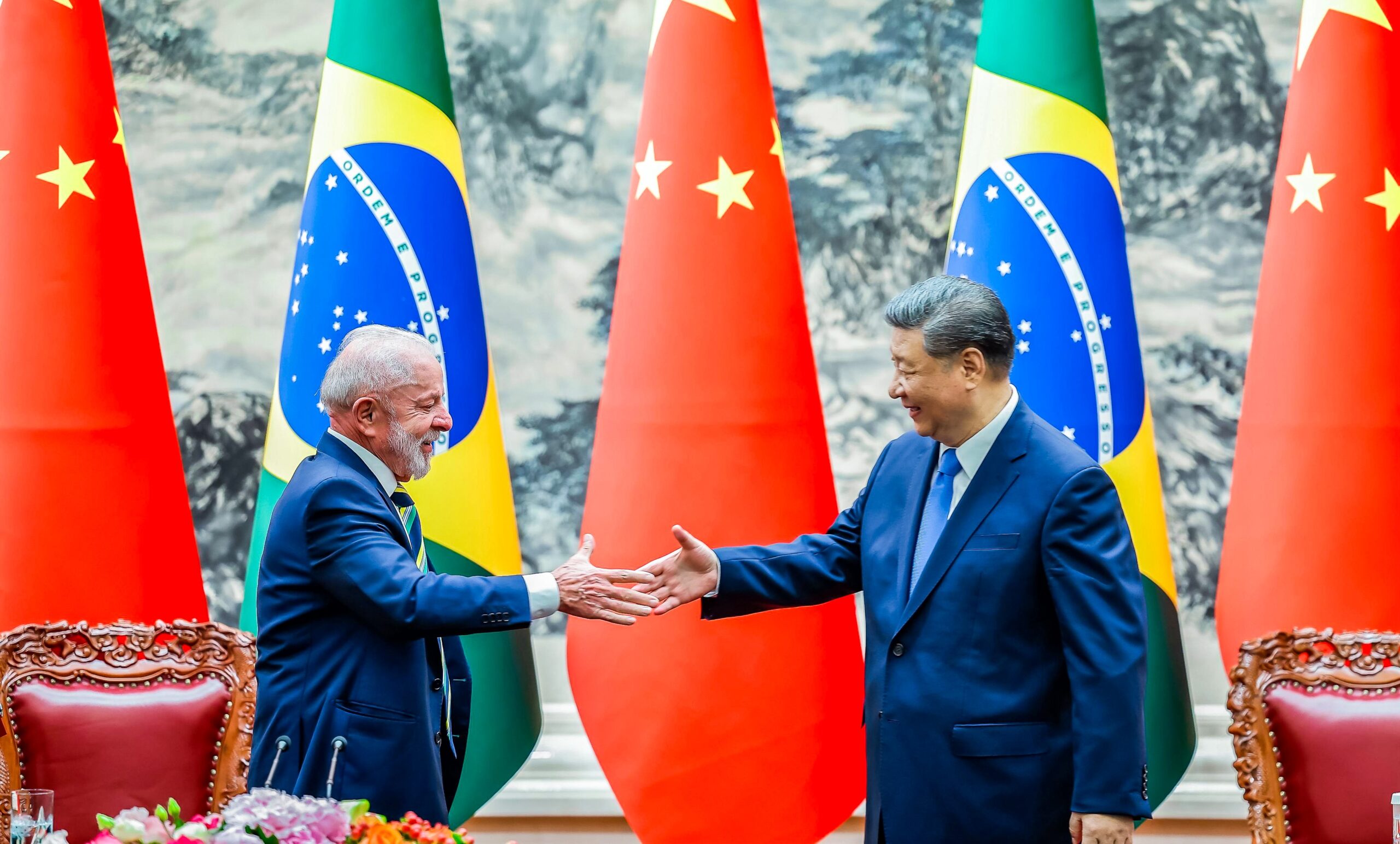
Peru is a good example of how Latin American countries can work with both major powers. China is Peru’s largest trading partner, and the Port of Chancay will likely strengthen that relationship even further (Reuters, “Peru and China”). At the same time, Peru continues to have important economic, political, and security ties with the United States. This shows that Latin American countries do not necessarily want to align themselves completely with one major power. Instead, competition between China and the United States can give them more options and, potentially, greater bargaining power.
Still, Chinese investment is not without risks. Becoming too dependent on exporting commodities to China could make Latin American economies vulnerable if Chinese demand slows. Chinese involvement in important infrastructure can also raise concerns about economic leverage, environmental standards, labor conditions, transparency, and control over strategic assets. These are legitimate concerns, and Latin American governments should consider the long-term consequences of major investments rather than focusing only on their immediate economic benefits.
However, the United States also needs to be careful about how it responds. If Washington treats every Chinese port, mine, or infrastructure project as a security threat, it risks ignoring the main reason countries are accepting these investments in the first place. Many Latin American countries need better infrastructure, greater access to international markets, and more development financing. China has recognized these needs and has been willing to invest in them.
The United States still has major advantages in the region. It remains deeply connected to Latin America through trade, migration, investment, geography, cultural ties, and longstanding diplomatic relationships. It is also still a major source of foreign direct investment throughout Latin America and the Caribbean. Foreign direct investment in the region reached almost $189 billion in 2024, showing that Latin America continues to attract interest from many international partners (Economic Commission for Latin America and the Caribbean). China has clearly gained influence, but this does not mean that it has replaced the United States.
The real issue is how each country is building its influence. China has increasingly built relationships through visible economic projects that countries can point to: ports, roads, energy projects, trade agreements, and investments. The United States cannot assume that its historical relationship with Latin America will automatically guarantee its position in the future. As China continues to offer economic opportunities, Latin American governments will naturally consider them.
Washington’s response in early 2026 illustrates both the urgency and the danger of approaching the region mainly through great-power competition. In February 2026, the Trump administration warned that Chinese control of Chancay could threaten Peru’s sovereignty after a court ruling restricted the authority of Peru’s port regulator (Associated Press). An appeals court subsequently reversed that ruling, reaffirming Ositrán’s oversight powers, as the regulator announced in July 2026 (Ositrán). The administration has also pressured Panama over Chinese-linked port operations near the Panama Canal and presented greater U.S. security engagement as a way to counter China’s regional presence (Thibault). These actions are consistent with a long history of heavy-handed U.S. involvement in Latin America, including support for regime change and intervention in the domestic politics of several countries. Even when Washington raises legitimate concerns, pressure that appears to disregard Latin American sovereignty can create resentment and make Chinese partnerships more appealing.
This does not mean Washington should pressure countries to choose between the United States and China. Doing so could push countries further away, especially when the United States has not offered equally visible economic alternatives. Instead, the United States should focus on becoming a more competitive and reliable economic partner. That means supporting infrastructure development, expanding trade opportunities, increasing access to technology and financing, and creating partnerships that help Latin American economies develop beyond simply exporting raw materials.
Latin American governments also have an important role to play. Competition between China and the United States can create opportunities, but countries should be careful not to replace dependence on one major power with dependence on another. Chinese investment can contribute to development, but governments should use these partnerships to diversify their economies, strengthen local industries, improve infrastructure, and protect their own long-term interests. They should also demand transparent contracts, enforce labor and environmental standards, and retain effective oversight of strategic assets.
The Port of Chancay is more than just a new port in Peru. It represents a larger change taking place across Latin America. Countries in the region have more international partners and more economic options than they did in the past, and they are increasingly willing to use those options to advance their own interests.
The United States should pay attention to that change. China’s growing presence in Latin America cannot be addressed simply by treating Beijing as a threat or expecting countries in the region to remain aligned with Washington. If the United States wants to maintain its influence, it needs to understand why China has become an attractive partner in the first place. History and geography may give the United States an advantage, but they will not be enough. In the future, influence in Latin America will increasingly depend on which countries are willing to show up, invest, and offer partnerships that actually respond to the region’s needs.
Sources
Associated Press. “In Blunt Warning, the U.S. Says Peru Could Lose Its Sovereignty to China.” AP News, 12 Feb. 2026. Accessed 15 Sept. 2026.
COSCO Shipping. “The Inauguration Ceremony of Chancay Port Was Successfully Held.” COSCO Shipping, 15 Nov. 2024. Accessed 21 Sept. 2026.
Economic Commission for Latin America and the Caribbean. “Foreign Direct Investment in Latin America and the Caribbean Rose by 7.1% in 2024, Totaling $188.962 Billion Dollars.” ECLAC, United Nations, 2025. Accessed 27 Aug. 2026.
Ositrán. “Segunda Sala Constitucional ratifica competencia del Ositrán para supervisar el Terminal Portuario de Chancay.” Gobierno del Perú, 1 July 2026. Accessed 21 Sept. 2026.
Reuters. “China’s Ganfeng Starts Lithium Production at Argentina’s Mariana Project.” Reuters, 12 Feb. 2025. Accessed 15 Sept. 2026.
Reuters. “China’s Guangzhou Port Starts Shipping Route to Peru.” Reuters, 29 Apr. 2025. Accessed 15 Sept. 2026.
Reuters. “China’s Xi Arrives in Lima for APEC, to Open Pacific Megaport.” Reuters, 14 Nov. 2024. Accessed 27 Aug. 2026.
Reuters. “Peru and China to Sign Strengthened Free-Trade Agreement in Xi’s APEC Visit.” Reuters, 8 Nov. 2024. Accessed 27 Aug. 2026.
Thibault, Harold. “A Hong Kong Billionaire’s Panama Ports Get Caught Up in China-US Rivalry.” Le Monde, 11 Apr. 2025. Accessed 21 Sept. 2026.
U.S. Geological Survey. Mineral Commodity Summaries 2025. U.S. Department of the Interior, 2025. Accessed 27 Aug. 2026.
Yepes, Manuel, and William Geballe. “China in Latin America: July 2025.” Council on Foreign Relations, 11 Aug. 2025. Accessed 27 Aug. 2026.