By: Faiqa Javed, Research Fellow
Pakistan has spent decades worrying about threats beyond its borders. Today, one of the gravest dangers to its future lies much closer to home: within Pakistan itself. It is visible in families struggling to afford electricity and food, in millions of out-of-school children, in graduates unable to find meaningful work, and in skilled professionals who believe their future lies elsewhere.
Pakistan still faces serious external and internal security threats, many of which are shaped by its complex geopolitical position by bordering India, Afghanistan, Iran, and China. These cannot be ignored. But Pakistan’s security debate has focused so heavily on borders, military power, and geopolitics that a vital question goes unasked: what does security mean if citizens lack basic economic and social stability at home?
The country’s recent financial crisis makes this urgent. Pakistan has averted an immediate economic collapse, largely due to the continued support from the International Monetary Fund and to inflation decreasing from record high rates, but stabilization is not prosperity. Falling inflation does not mean prices return to where they were. Families still face staggering costs for power, food, transport, education, and healthcare. As a result, ordinary households have not felt a meaningful recovery in daily life.
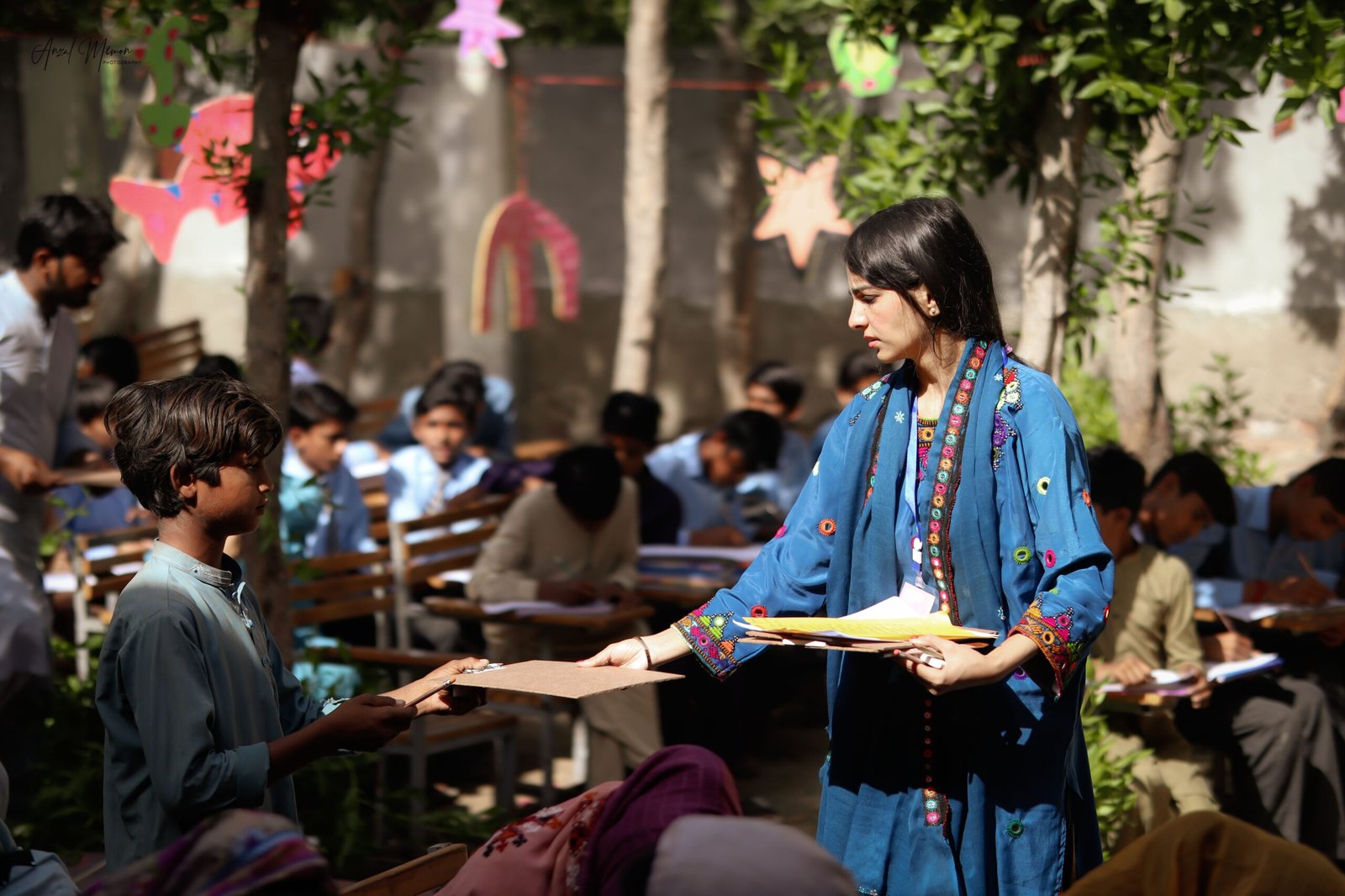
For young Pakistanis, the issue goes beyond living costs to whether they can envision a stable future in their own country. Pakistan’s vast youth population should be its greatest asset, but only if people are educated, healthy, and able to earn a decent living. Pakistan is struggling on all three fronts. UNICEF estimates that roughly 25 million children aged 5 to 16 are out of school, child malnutrition remains widespread, and the World Bank reports dangerously high levels of learning poverty.
These are not just social development statistics; they are national security indicators. A child denied an education today faces diminished economic potential tomorrow. Research also shows that lower levels of education are associated with higher crime rates, while greater access to education can help reduce crime rates, adding another threat to internal security. Multiplied across millions of children, the effects are lower productivity, persistent poverty, growing social frustration, and a shrinking tax base that leaves the government with fewer resources to invest in infrastructure, public services, climate resilience, or even national defense.
The growing exit of skilled talent reflects this same crisis. Migration itself is normal. The Pakistani diaspora is a massive asset whose remittances support millions of families. The real concern remains in why educated professionals feel forced to leave. When doctors, engineers, researchers, and entrepreneurs believe that stability, fairness, and opportunity exist only abroad, their departure becomes a warning about confidence in Pakistan’s future. Losing this human capital weakens the very institutions needed for national recovery.
Regional and social inequalities make these pressures worse. Balochistan faces vast gaps in infrastructure, healthcare, education, and jobs alongside ongoing political and security tensions. Khyber Pakhtunkhwa endures renewed violence after decades of military operations and displacement. Rural Sindh suffers severe climate risks and deep poverty despite sharing a province with Karachi, the country’s economic engine. At the same time, inequality between wealthy and poor Pakistanis shapes access to quality schools, healthcare, employment, justice, and political influence. Security therefore looks very different for an affluent urban family than for a low-income household struggling to meet basic needs.
This also raises questions about how Pakistan treats Afghan refugees. Pakistan has hosted millions of Afghans for decades, but recent repatriation drives have forced many to return, including families who lived there for generations. Islamabad has legitimate concerns about border control, undocumented migration, and terrorism. But treating refugees strictly as a security problem shifts attention from deeper failures. Militancy, weak governance, unemployment, and public anger in border regions cannot be solved by deporting vulnerable people. Pakistan’s leadership must confront the governance breakdowns that allow instability to thrive, not just assume insecurity comes from across the border.
In Pakistan-administered Kashmir, security-first policies disrupt ordinary life. Extended communication blackouts, including a reported 70-day shutdowns imposed before and after elections, do far more than block social media; they affect businesses, online education, journalism, and contact between families. Authorities cite security concerns, but prolonged restrictions can deepen resentment and damage trust in the state.
The issue goes beyond internet access. Human rights organizations have raised concerns about restrictions on political rights, media freedom, and civil liberties nationwide. These restrictions carry real economic costs: businesses, students, journalists, and citizens need reliable communication and open information to thrive. Economic activity, education, accountability, and public trust can suffer when people fear speaking out or when they lose digital access. A government cannot build real security by asking citizens to accept fewer rights while ignoring the failures that created that anger.
These problems cannot be solved by security measures alone. Schools will not end insurgency, restored internet access will not resolve political deadlocks, and economic growth will not resolve territorial disputes. But military force alone is equally insufficient. Citizens trust the state when it protects both their safety and their ability to build a decent life.
Geopolitics has long encouraged Pakistan’s focus on external threats. From the Cold War to the post-9/11 era, geography made Pakistan strategically vital to Western powers. Today, Islamabad relies on China, Gulf allies, and international lenders for investment and financial support.
These partnerships remain necessary, but strategic leverage can never replace internal reform. Foreign loans offer temporary breathing room during a crisis; they cannot fix weak governance or create sustainable prosperity. Pakistan’s leaders must ensure that international relationships build productive capacity, create jobs, and strengthen public institutions at home.
Maintaining military readiness in a dangerous neighborhood remains essential. But Pakistan does not have to choose between guarding its borders and investing in its people. The two depend on each other. A strong military requires a healthy economy, and a healthy economy depends on an educated and productive population that feels valued by its state.
Islamabad and provincial governments must redefine what counts as an investment in national security, protecting funding for education, health, and local government even during tight fiscal times. Major foreign investment projects should be judged not just by the dollars they bring in, but by whether they create real jobs and long-term skills for Pakistani citizens.
Pakistan has spent decades making its geography important to the rest of the world. Its true task now is internal: making the state work for the people living inside it. Pakistan’s future will not be decided only in foreign capitals, but in its own classrooms, workplaces, and homes, where millions of young Pakistanis are deciding whether to stay and build their country or leave it behind.