The war had been sold, at least in part, as a rescue mission for the Iranian people against the Islamic Republic. Part I left open whether that language was merely rhetorical cover or something more complicated. Here, I argue that it was more complicated.
More likely, Jerusalem and Washington were pursuing several parallel tracks that were not necessarily mutually exclusive. For example, the rescue narrative potentially functioned as a legitimacy shield while also testing whether unrest might emerge. The divergence arises from potentially different objectives and division of labor.
A major factor contributing to having several parallel tracks are different strategic objectives between the US and Israel. For Israel, this is rather an existential war as it does not have a strategic depth due to its size and geography of being surrounded by unfriendly and hostile countries. However, it enjoys more domestic support for war; its society has shown higher tolerance for war weariness than American public; its economy and prestige is less affected by the closure of Strait of Hormuz; and it is vulnerable to Iran and its proxy’s threat while the US is oceans away – compelling Israel willing to invest long term revisions in the region. This is while, the war is unpopular in the US according to the polls, in a political culture where regime change carries a toxicity earned through Iraq and Libya. The United States was less directly dependent on Gulf oil than many Asian economies, but it was more politically and macroeconomically exposed to energy-price volatility than Israel as higher oil and gasoline prices fed inflation, threatened consumer sentiment, and turned the closure of Hormuz into a test of Washington’s credibility as guarantor of global sea-lane security. It is therefore not surprising that Washington preferred a short, coercive campaign aimed at extracting a negotiated deal, while Israel’s calculus pointed toward longer-term structural change. Netanyahu later made this logic explicit. Israel, he said, “wanted to create the conditions that would allow the Iranian people, should they wish, to remove from themselves this terror regime.”
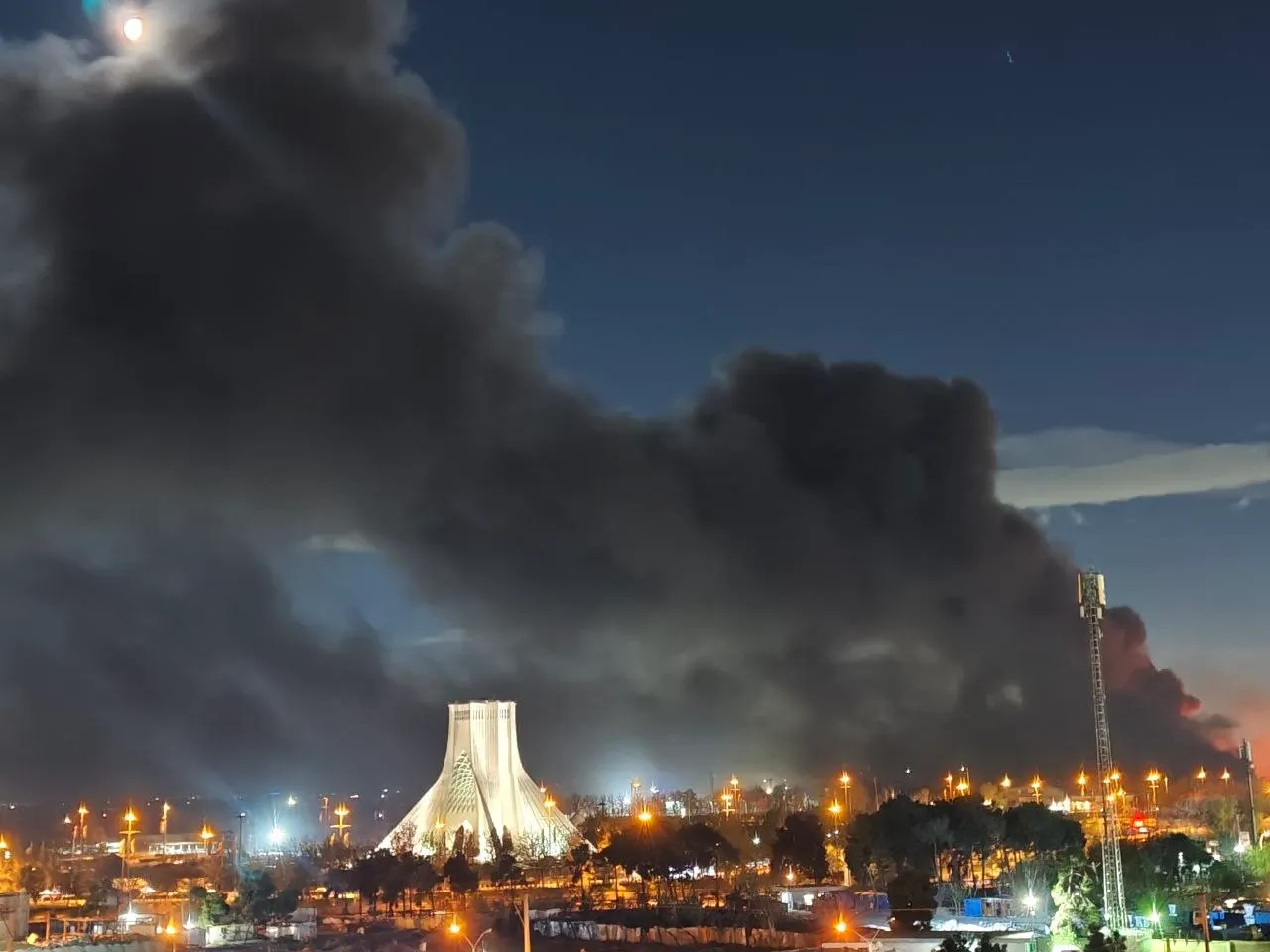
This divergence was visible not only in political objectives, but also in target selection. Washington borrowed the language of liberation more than it operationalized it. After the January massacre, the United States leaned heavily on rhetoric and sanctions, but its own kinetic campaign was aimed mainly at the war’s strategic infrastructure including nuclear, aircraft, missile, drone, maritime, bridges, and Hormuz-related targets. Israel, by contrast, made the regime’s domestic coercive apparatus part of the battlefield: Basij checkpoints, police positions, and figures tied to the machinery of internal repression and the state survival. American logistical and intelligence support were indispensable to Israel’s ability to sustain strikes deep inside Iran.
However, Israel’s efforts were in line with encouraging and facilitating eventual state collapse or a revolution alongside its efforts to neutralize Iran’s military threats while Washington focused on the latter and limited the rescue narrative more to the rhetorics, perhaps not to spoil its chance to make a quick deal. They converged on elimination of certain senior leadership, like assassinations of Khamenei and Ali Larijani – but even here the underlying logic diverged. Israeli strikes could be read as a broader attempt to hamper the country’s offensive capabilities and open the possibility of more fundamental change. While for Washington the same strikes may have been useful a way to remove the hardliners and to shock the surviving leadership into greater flexibility and accelerate a settlement. As a month into the war and days before the cease fire, Trump claimed “regime change” in Iran is already complete and suggested that the current leaders were “much more reasonable.”
The situation in Lebanon makes this rift concrete. On June 7th and 8th, Iran and Israel had traded direct fire for the first time since the April ceasefire: Tehran fired missiles toward Israel in retaliation for Israeli strikes on Hezbollah strongholds near Beirut, and Israel responded by striking targets inside Iran. Trump then pushed both sides to “stop shooting,” and both temporarily halted their attacks. But the episode revealed the deeper divergence. Washington wants the Lebanon front contained because Tehran has made a Lebanon ceasefire part of any broader peace deal with the United States. While for Israel, Hezbollah is a direct security threat on its border and looks with suspicion to a deal that could constraint its freedom in Lebanon. The US and Iran too have continuously exchanged fire in a low tensity attrition war around the Persian Gulf and Sea of Oman theater, which has intensified in the last days following the downing of the US Apache attack helicopter and Trump losing patience as the negotiations have been dragging on with no positive outcome. But the underlying logic remains consistent, for Washington, coercion is a means to extract a deal; for Israel, it is a means to weaken, fragment, or ultimately collapse the regime itself.
The divergence in objectives fed a hedging approach suited to the war’s extreme uncertainty. The rescue narrative was capacious enough to cover several parallel tracks at once: legitimacy, unrest, elite fragmentation, bargaining leverage, nationalist containment, operational intelligence, and psychological pressure.
Parallel Tracks
- Legitimacy
Perhaps the most encompassing function of the rescue narrative was legitimacy. It softened the legal and diplomatic vulnerability of the war by shifting its moral register as what might otherwise look like geopolitical aggression could be presented as humanitarian necessity. This mattered especially in the United States, where the war never enjoyed the same level of public support it had in Israel. The rescue rhetoric gave the war a moral vocabulary that allowed a large number of Iranians to rally behind it both inside and outside of Iran that complicated anti-war discourse. In the short term, this partially worked, as it made the war harder to oppose in simple moral terms. But it slowly eroded as the campaign increasingly targeted civilian infrastructure and its humanitarian and human rights rhetoric faded.
- Internal unrest and potential regime change
Internal unrest is what the regime has long feared most. Ayatollah Khamenei had repeatedly warned that internal enemies were more dangerous than external ones. Ironically, he was ultimately killed by the latter. In a more recent context, that fear of simultaneity had been named explicitly by the Islamic Republic’s own security apparatus, which described the scenario as a potential “connection between the air and the street” – the nightmare combination of foreign bombardment and domestic uprising converging at once.
This was probably Israel’s preferred outcome, hopping that external military pressure could intersect with internal unrest, producing a crisis the regime could not easily manage. Netanyahu defended the campaign on June 15 by saying its main goals had been achieved, while insisting that regime change had not been the formal objective. Rather, Israel had sought to “create the conditions that would allow the Iranian people, should they wish, to remove from themselves this terror regime.” Enmity with Israel is institutionalized ideologically in the ontology of the Islamic Republic, making a regime change appear as the only way to guarantee long term stability.
A potential mass uprising could ideally lead to regime change; or at least, it could pin the regime down in internal strife, making it more amenable to negotiations with the U.S.-Israeli side. The logic was not that bombs alone could necessarily topple the regime, but that bombs and internal unrest together could produce a crisis of governability. As in Germany in 1918, the point was not that defeat required enemy occupation of the capital; military pressure, allied collapse, and internal unrest could make a state far more willing to concede before total destruction. In Iran, an armed internal uprising could have weakened the regime’s resilience in a way airstrikes alone never could.
Earlier efforts to facilitate Iranian Kurdish militia incursion into Western Iran could be seen in that light. Kurds needed to believe their incursion would be accompanied with credible commitments and political guarantees. The regime change message was necessary and insufficient in that regard. The geopolitical and capacity related constraints heavily restricts Iranian Kurdish militia ability to go on offensive.
- Elite fragmentation and insider coups
According to Svolik (2012) generally about two third of the unconstitutional leadership in authoritarian regimes changes occur via elite struggle. A war messaged as a rescue operation rather than a limited aerial bombardment campaign, could have encouraged elite defection and potential insider coup to negotiate and prevent a total regime change that would lead to loss of their privilege. A recent New York Times report claims that US and Israel explored the possibility of elevating the former hardliner Iranian President Mahmoud Ahmadinejad – who ironically is famous for his antisemitic rhetorics – as Iran’s new leader. The report suggests that the strike on Ahmadinejad’s home on the first day of war was designed to free him from house arrest. However, many have casted doubt about the plausibility and authenticity of such scenario.
But what is more certain is that Trump favors a Venezuela template – where a quick decisive military action on removal of hostile leadership is followed by more US-Israeli side had certainly scanned for potential insider elites that are more compliant. Trump’s comment on the exiled prince Reza Pahlavi could be understood that way that he prefers “somebody from within” to lead. Therefore, it is highly likely that Americans and Israelis were scanning and encouraging potential pragmatic regime insiders during the earlier phases of the war.
- Coercive bargaining through regime-change threat
The regime-change message did not have to produce actual regime change to be useful. It could make the possibility of regime change feel real enough that surviving leaders might prefer negotiation to escalation. In that sense, the rescue narrative functioned as a threat as much as a promise: if you do not bargain, the air campaign may connect with unrest, defections, Kurdish pressure, or elite fragmentation. The point was not necessarily that Washington and Israel had a fully worked-out transition plan. It was that the specter of collapse could make a damaged regime more flexible at the table.
This may be where the U.S. and Israeli logics partially overlapped while still diverging. Israel had stronger incentives to push the threat toward actual structural weakening or regime collapse. Washington, by contrast, could use the same threat more instrumentally, but not necessarily to replace the Islamic Republic, but to make its remnants more negotiable. Trump’s own language moved with the needs of the moment. Trump’s later claim that regime change had already been “achieved” fits this logic. It allowed him to preserve the rhetoric of victory while shifting the practical goal back to settlement.
Trump’s own language oscillated with the needs of the moment. When he wanted to pressure Tehran, he returned to the language of massacre and rescue, invoking the killing of “innocent, unarmed protesters” and suggesting that Iranians would fight back if they were able. When negotiations seemed closer, he shifted toward the language of deal-making, describing the surviving leadership as more rational and more reasonable than those who had been killed. Recently, on June 11 after first threatening to hit Iran “very hard” and suggesting the United States could seize Kharg Island and other energy infrastructure, Trump abruptly cancelled the strikes once he said Iranian leaders had accepted a deal. He then folded the retreat back into the language of victory: “I really believe it is a regime change,” he said, because the current leaders were “much more rational than the people that are no longer with us.” The constant shifts do not prove his earlier concern for protesters were necessarily insincere. But it does show how easily human-rights language could become bargaining pressure, and how quickly it could soften once a settlement appeared possible.
- Anti-rally around-the-flag effect
By speaking directly to Iranians, Trump and Netanyahu tried to prevent the Islamic Republic from claiming that foreign attack meant national unity. The message was simple: the regime is the target, not the nation. That distinction was politically useful, but fragile. The longer the bombing campaign continued and military targets were exhausted, the harder it became to ignore the undefended civilian infrastructure as a target; and to separate a war on the state from a war experienced by society.
- Operational
The rescue narrative may also have encouraged local information flows and facilitated defections from the security forces. The combination of regime’s repression and alienation with Israel’s efforts to appear more than an enemy of enemy, worked well to obtain assets inside Iran. Furthermore, the regime change narrative combined with airstrikes work well in tandem to facilitated military desertion. A commander or solider might abandon his post much more willingly should he think even at slight chance the regime may not survive the war.
- Psychological warfare
The liberation and regime change message rather than a time constrained air strike could have a chilling effect on the various of the regime that could weaken their morale, encourage defections, and commanders or soldiers hesitate before carrying out orders or even showing up at their posts. When Israeli drones started targeting Basij checkpoints a mass paranoia appeared on the militia’s ranks. This is visible from the leaked voice message from a commander trying to provide calm his units down, provide safety tips and downplay the danger of drone attacks. Such mass fear alone could not be caused by a few drone attacks who are armed lightly – it was the belief that such attacks are meant to stay and perhaps work as in tandem with an uprising which would be more challenging for militiamen that were so used to shoot unarmed protesters with ease. However, it could backfire too. As the regime felt an existential threat and took a madman approach by closing the Strait of Hormuz and attacking even its neighbors that tried hard to prevent the war (i.e. Oman and Qatar).
The people left off the table
Nearly three months later, the rescue mission narrative has quietly faded. The regime has sustained heavy damages, but it has survived and has credibly tested new forms of leverage: the closure of the Strait of Hormuz, missile and drone pressure on the Persian Gulf, and the ability to make regional fronts part of the negotiating price – issues that were not there before the war.
The irony is hard to miss. Trump may now regret three decisions that helped produce this moment: abandoning the JCPOA in 2018, stopping the 12-Day War in 2025 when Israel still had momentum, and later raising expectations with the language of rescue. He now finds himself bargaining again with the same regime, only under worse conditions and more complications. Whether any agreement reached under such circumstances can produce lasting stability remains an open question.
For a brief period, human rights in Iran seemed to matter as more than background rhetoric. Trump had warned the regime, against the killing of the protesters and weeks before the war on February 6th, Marco Rubio said that for talks with Iran to become meaningful, they would have to include not only ballistic missiles, regional proxies, and the nuclear program, but also “the treatment of their own people.” Yet by the time the war entered its bargaining phase, that broad agenda had narrowed and the people whose suffering had helped moralize the war were no longer the visible subject of the bargain.
On June 16th when asked directly whether Iran killing its own people would derail the deal, Trump suggested the worst killing had occurred under previous leadership – locating the atrocities in a past conveniently described as gone. JD Vance went further, retroactively narrowing the account of what the rescue rhetoric had meant by saying: The goal, he said, had never been to install Reza Pahlavi or lead Iran’s political transition, “if the Iranian people want to rise up, great. That’s their business… what we wanted is a cessation of the nuclear program.” The reported terms of the emerging memorandum of understanding, set to be signed on June 19th, complete the picture. Its non-interference clause (if the leaked text is accurate) would formally prohibit the language with which this war began. No more “help is on the way.” The rescue narrative, which opened the war, would be written out of the settlement that closes it.
Once bridges, energy facilities, transport networks, and civilian sites became part of the target set, the war began to produce a different kind of memory. The early jubilation over Khamenei’s death and the strikes at the Basij checkpoints slowly gave way to a more frightening thought, that the war could turn into a total war that would leave people without basic necessities including water and electricity among them – and that when the bombs stopped, ordinary people would be left alone with a wounded and vengeful regime.
“I don’t know of any country in the world where there’s a bigger difference between the people and the people who run the country,” Rubio has said repeatedly. Netanyahu has also reiterated such view in different phrases; here is one from the June war 2025: “Israel’s fight is not against the Iranian people. Our fight is against the murderous Islamic regime that oppresses and impoverishes you.” Both the US and Israel have consistently acknowledged the difference between the regime and the people – yet infrastructure campaign has made that distinction harder to sustain. As Julian Spencer-Churchill writes:
“What distinguishes the actions of these external actors from those of the regime itself if all appear indifferent to the welfare of the population? Are the targets truly the state or the country as a whole? If the objective is behavioral change or capitulation, the experiences of Gaza, Yemen, and Lebanon suggest that such strategies are unlikely to succeed, particularly in a country as large and complex as Iran.”
It is not the first time a great power has encouraged people to rise and failed to protect them when they did. In 1944, Stalin halted the Red Army on the Vistula and watched Warsaw burn rather than allow a non-communist resistance to survive liberation. Radio Free Europe fueled hopes among Hungarian revolutionaries for Western military support that never came in 1956. Bush called on Iraqis to take matters into their own hands in 1991 and stopped at Kuwait’s border – help came eventually for the Kurds in the north, too late and too little for the Shia in the south. Obama drew a red line in Syria and stepped back when it was crossed. Each case had its own context specific logic of failure. But the pattern is consistent: the rhetoric of rescue costs little to deploy and much to honor. The people who took to the streets, risking their lives in a desperate and unequal battle for freedom, did so with one eye on the sky – and were left to pay the difference.
Mani Nouri is a PhD student at the Department of Political Science, University of Toronto. The views expressed in this article are solely those of the author and do not necessarily reflect the official policy or position of the Tessera Research Collective. You can find this piece, along with other analyses by our contributor Mani Nouri, on his personal Substack page. Click and subscribe.