Image credit: The White House, via Wikimedia Commons (public domain).
By: Jacob Hoffman, Research Fellow
In 1937, the world was shocked and horrified by images of the bombing of the Basque city of Guernica by Spanish Nationalist forces during the Spanish Civil War that claimed the lives of hundreds of civilians. In 2026, the world can watch livestreams, social media videos, and short-form content in high definition as Ukrainian and Russian soldiers have their guts blown out by drones. During a visit to the museum where Picasso’s Guernica, painted in commemoration of the bombing, is held, Ukrainian President Volodymyr Zelenskyy said, “Imagine that people now — in Europe — live for weeks in basements to save lives. From shelling, from air bombs. Daily! April 2022 — and the reality in Ukraine is as if it’s April 1937.” The world does not need to imagine, because Russia’s invasion of Ukraine introduced most of it to the modern war’s most visible feature: combat footage.
War cannot be fought without propaganda, and modern war cannot be fought without modern propaganda. The language of internet use, social media, and global connectivity have invaded the conflict information space, and combat footage is one of the most notable and gruesome features of this invasion. Rather than incidental videos of combat taken by journalists or a stray combatant with a phone, combat footage in the modern era is a specifically curated film of active combat designed to be shared in the same manner and spaces as social media. Filmed by specially designated crews of cameramen, drones, and helmet-cam-equipped soldiers, combat footage is designed with the language of internet content consumption in mind and includes fast-paced editing, curated shot collection, and emotionally driving music.
Though far from the first war seen on screens, the Russo-Ukrainian war cemented combat footage as a critical part of the modern digital media strategy of any combatant fighting a war in the internet age. From Ukraine to Myanmar to Sudan, in modern warfare, death and destruction are just as much a part of the information campaign as press releases and manifestos.
The ongoing 2026 Iran War is no exception. Though thus far lacking in the active ground fighting that has defined other modern wars, both sides of the war in Iran have taken lessons from those battlefields, including the need to demonstrate the veracity and legitimacy of their own narratives through audiovisual propaganda in the form of combat footage. As the question of escalation hangs dangerously in the air, this use of combat footage provides a unique insight into the broader narratives that underscore their respective sides, the successes and failures of those narratives, and the potential evolution of this type of propaganda into the future.
Of the two sides, the American war effort rests upon a delicate balance of narratives that belie the precarious nature of its war’s viability, and this is reflected in the careful use of combat footage in American propaganda. In contrast, the Islamic Republic of Iran has been able to make prodigious use of the imagery of violence and its aftermath to counter American claims and demonstrate its own military efficacy.
Regarding its narratives, the US administration sits with several disadvantages. Firstly, the war is broadly unpopular amongst the American people, according to a poll by the Washington Post, with a mere 28% of Americans believing the Iran war is worth fighting, as opposed to 68% who believe it’s not worth fighting. According to a separate poll by Politico, even amongst the President’s so-called “MAGA Trump” voters, 37% believe the US should continue the war only if it doesn’t increase costs, with an additional 19% saying the US should not continue its involvement in Iran, regardless of costs in America. Thus the US needs to avoid the perception that this already unpopular war will become a “forever war,” something the current administration has taken great pains to deny, and must then focus on portraying the war as both overwhelmingly decisive and limited in scope.
The US also must contend with the poor optics of the bombing of a girls’ school in Minab during the opening days of the war, a strike which UNESCO said, “constitutes a grave violation of the protection afforded to schools under international humanitarian law.” Mohamed Vall with Al-Jazeera noted this strike, “call[s] into question US and Israeli claims that ‘they are targeting only military targets and they are trying to punish the regime, not the people of Iran.’” As the US, at least initially, sought regime change at the behest of an uprising by the Iranian people, Voll argued that, “US President Donald Trump has promised the Iranian people that aid or help is coming their way, but now we are seeing civilian casualties. That’s something that the Iranian government will stress as a case of violation of international law and an aggression against the Iranian people.” As a result, the US has focused its narrative that US strikes are precise and do not target civilians.
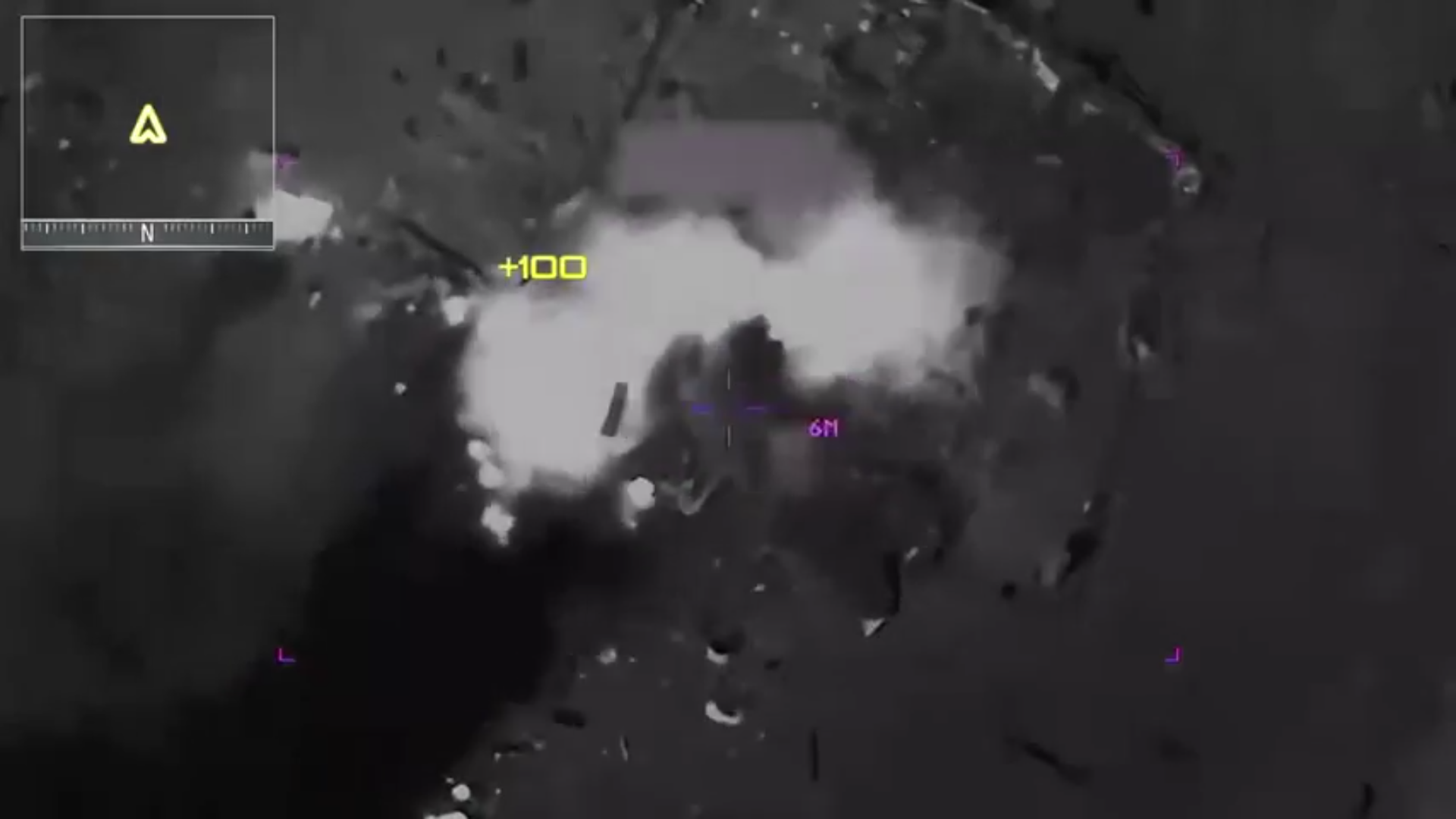
In line with its careful war narrative, the US is employing a careful use of combat footage. On March 5th, US Central Command (CENTCOM) published a video to their YouTube channel titled “100 Hours” of Operation Epic Fury. In this video, the President, Secretary of War Pete Hegseth, and US Navy Admiral Brad Cooper can be heard discussing Operation Epic Fury over shots of the US Navy firing off missiles and launching planes. These images of the US military in action are coupled with unclassified shots of Iranian weaponry, ships, and aircraft being destroyed, accompanied by swelling, epic music and the Secretary of War extolling the strikes as, “the most lethal, most complex, and most precise aerial operation in history.” The minute-long video summarizes the US war-time narrative perfectly, demonstrating that the US military is overwhelmingly powerful and at a strong advantage over an easily overcome and already-near defeated Iranian military, while also displaying that the strikes are precise, targeting only military structures and not threatening to pull the US into a prolonged war, all done with a high-production value video that features quick editing, exciting music, and dozens of shots of destroyed enemy weaponry. With the messaging in this video, the administration assures the American people the war will not last long nor cost the US much while still delivering an overwhelming victory.
As the US narrative has shifted to demonstrating American control over the Strait of Hormuz, the US has shifted its use of combat footage, such as this July 13th video posted to the CENTCOM website showing a US sea drone destroying an Iranian submarine, as well as a July 23rd video featuring an edited montage of Iranian military equipment being destroyed, including missile sites and boats. Both these videos continue to show the US military as at an overwhelming advantage and destroying the Iranian capability to threaten the Strait by destroying boats, submarines, and missiles.
But here, American narratives meet with Iranian counter-narratives in the online domain of their conflict, which demonstrate the fragility of the US’s claims thus far.
One of the prevailing US narratives has been that the Iranian military has been functionally destroyed, with the President claiming as recently as July 13th during an interview, “they [Iran] have no Navy, have no Air Force, have no anything. They have no military, they have nothing.” This was days before four US service people were announced dead that weekend, killed by Iranian missile strikes and drones.
Trump’s claim came the same day that PBS reported Iran struck two tankers associated with the UAE, contravening another major US assertion the Strait of Hormuz is kept open and safe by the power of the American military.
Despite US attempts to make the Iranian military appear defeated and American war goals within reach, if not already achieved, Iranian actions have proven otherwise, and their propaganda serves to highlight the extent of their contradiction of US assertions.
The official Telegram account of the Islamic Revolutionary Guard Corps (IRGC) posts dozens of videos daily, a prolific font of propaganda that makes extensive use of combat footage that supports and harmonizes with their overall narratives. One of the most common videos on the channel are videos of missile and drone launches, edited montages showing a series of military installations releasing weaponry into Iranian skies towards targets across the Middle East. These videos notably feature the landscape around missiles conspicuously blurred out so as to not reveal their location to American and Israeli intelligence.
One such video posted on March 19th features a montage of Iranian missiles being constructed and decorated with Farsi phrases backed with a driving orchestral score, before showing a montage of presumably American and Israeli drones being struck by these Iranian air defences. Another more recent example posted July 23rd shows much the same, the video a montage featuring long shots of several Iranian missiles being launched and traversing the sky towards their targets with rousing music in the background.
The IRGC also shares videos attempting to demonstrate their capacity to threaten shipping in the Strait of Hormuz, including a video from July 17th which appears to show an FPV drone stalking a shipping tanker, before presumably attacking the ship. These videos demonstrate to both Iranian and global audiences that US claims about the elimination of the Iranian military are false, that it still maintains and launches drones and missiles capable of threatening the Strait of Hormuz and American and Israeli military targets.
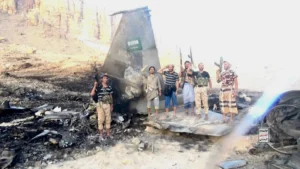
Not only does the IRGC create videos displaying their arms in action, they also make propagandistic use out of the destruction they cause. In a series of videos released on July 21st, the IRGC compares satellite imagery of the Muwaffaq al-Salti Airbase, where at least two American servicepeople were killed, from before and after the Iranian attack, demonstrating to their local and global audiences the Iranian capacity for hitting American military targets despite all claims to Iranian neutralization and celebrating the destruction of American military assets.
An important note to be made about the IRGC’s missile and drone videos is that they do not contain any proof of when these videos were made, nor who made them. One could argue that these videos are fake, that if the videos from July were filmed in March or April and uploaded this month there would be no way of disproving that, which is true. However, the importance of these videos isn’t in their strict veracity, but in their propaganda value. The Iranian military doesn’t need to prove beyond a reasonable doubt that every missile it showed was aimed on target and hit something, only that they are continuing to produce them and can still hit targets in the Strait, creating anxiety about traversing the Strait and disproving American claims.
Already in this war, the imagery of destruction and combat have been utilized to great propagandistic effect, where images of combat have supported or contravened the wartime narratives of the two primary combatants. This op-ed does not even touch on the use of FPV drones and helmet cam footage seen in the Israeli-Hezbollah war.
However, nothing in this war has touched on the gruesome footage regularly being broadcast out of Ukraine, where videos of FPV drones dropping grenades and ground troops’ assaults in the trenches are shown every day. That could change, as the US military builds up its forces in the Middle East once again and Trump threatens to potentially put boots on the ground in Kharg Island. One pro-American think tank has cited lessons from Ukraine as a reason to avoid this eventuality, as, “upon any successful [drone] strikes, the Iranian regime would be expected to release videos of those attacks online, using the graphic deaths of American service members as propaganda.”
This strategy of displaying American deaths to the world could be practical for Iran, as a CBS poll in April found that 70% of registered American voters did not feel the war was worth it given the number of U.S. military casualties. And as the US is already promising, “a head for an eye,” according to the Secretary of State Marcio Rubio, the potential for this gory visual rhetoric to spiral out of control presents a possibility that is far from remote.
Any expressed views and potential inaccuracies belong to the author.
Bibliography
Abdelgadir, Amgad and Vandermeersch, Sebastian. “Sudan’s ‘Lion Cubs’ – the Child Soldiers
Going Viral On Tiktok.” AllAfrica, February 20, 2026. https://allafrica.com/stories/202602200633.html
Al Jazeera Staff. “Death toll in Israeli strike on southern Iran school rises to 165.” Al Jazeera,
March 1, 2026. https://www.aljazeera.com/news/2026/2/28/israel-strikes-two-schools-in-iran-killing-more-than-50-people
Al Jazeera Staff and AP. “Trump says US ‘may take over Kharg Island’: Here’s what you need to
know.” Al Jazeera, July 8, 2026. https://www.aljazeera.com/news/2026/7/8/trump-says-us-may-take-over-kharg-island-heres-what-you-need-to-know
AP News. “US soldiers killed by Iran were from Texas and Hawaii, military says.” The
Associated Press, July 20, 2026. https://apnews.com/article/iran-war-us-soldier-deaths-jordan-attack-1fd99826dfd511913b63d0b033b262d9
BBC. “Briefing: Iran’s IRGC announces launch of official social media accounts.” BBC, August
27, 2026. https://monitoring.bbc.co.uk/product/b0004hsf
Boak, Josh, Gambrell, Jon, Toropin, Konstantin and Weissert, Will. “Iran attacks on tankers in
Strait of Hormuz kill and injure crewmembers, UAE says.” PBS, Jul 13, 2026. https://www.pbs.org/newshour/world/trump-says-u-s-will-blockade-iran-in-the-strait-of-hormuz-and-will-charge-a-toll-for-safe-passage
Brobst, Ryan and McMillan, Cameron. “Why seizing Iran’s Kharg Island could be a trap of
America’s own making.” Foundation for Defense of Democracies, March 26, 2026. https://www.fdd.org/analysis/op_eds/2026/03/26/why-seizing-irans-kharg-island-could-be-a-trap-of-americas-own-making/
CBS News. “U.S. builds up military in Middle East as Iran war continues.” CBS News, Jul 23,
Davis, Sarah. “Rubio: Trump military policy for Iran is ‘head for an eye’.” The Hill, July 23, 2026.
https://thehill.com/homenews/administration/5985219-rubio-trump-us-military-iran-war-strategy/
Dunbar, Marina. “Pete Hegseth says US is ‘investigating’ deadly strike on girls’ school in Iran.”
The Guardian, March 4, 2026. https://www.theguardian.com/world/2026/mar/04/pete-hegseth-denies-responsibility-iran-school-strike
Guardian, The. “From the archive, 30 April 1937: Editorial: the senseless bombardment of
Guernica.” The Guardian, April 30, 2015. https://www.theguardian.com/world/2015/apr/30/bombing-guernica-franco-spain-civil-war-1937
Hart Research Associates/Public Opinion Strategies. “CNBC All-America Economic Survey Q1
2026.” Hart Research Associates/Public Opinion Strategies, April 15-19, 2026. https://fm.cnbc.com/applications/cnbc.com/resources/editorialfiles/2026/04/23/Toplines_260142_CNBC_AAES_Q1_2026_Topline.pdf
McClure, Tess and Parent, Deepa. “Minab school bombing: how the worst mass casualty event
of the Iran war – a visual guide.” The Guardian, March 3, 2026. https://www.theguardian.com/global-development/2026/mar/03/minab-school-bombing-how-the-worst-mass-casualty-event-of-the-iran-war-unfolded-a-visual-guide
Messerly, Megan. “‘A politically impossible situation’: New poll shows Trump voters losing
patience with Iran war.” Politico, July 22, 2026. https://www.politico.com/news/2026/07/22/poll-maga-souring-iran-war-costs-trump-01006976
Naishadham, Suman. “Zelenskyy visits Picasso’s ‘Guernica,’ drawing parallel to Ukraine’s
bombing.” PBS, November 18, 2025.https://www.pbs.org/newshour/world/zelenskyy-visits-picassos-guernica-drawing-parallel-to-ukraines-bombing
Olay, Matthew. “Hegseth Draws Distinction Between Epic Fury, Previous Conflicts.” Pentagon
News, March 19, 2026. https://www.war.gov/News/News-Stories/Article/Article/4438252/hegseth-draws-distinction-between-epic-fury-previous-conflicts/
Ordoñez, Franco. “How Trump’s Iran war objectives have shifted over time.” NPR, March 25,
Schneid, Rebecca. “Trump Claimed Total Control of Iran’s Airspace. Then Two Warplanes Were
Downed.” Time, April 4, 2026. https://time.com/article/2026/04/04/f-15-shot-down-iran-search/
@sepahnewsir403. “شکارچیان آسمان آمادهاند.” Telegram, March 19, 2026.
https://t.me/sepahnewsir403/11527?t=0
@sepahnewsir403. “تصاویر حملات ترکیبی موشکی – پهپادی با شلیک موشکهای عماد، خیبرشکن، ذوالفقار، فتاح و
پهپادهای شاهد در موج ۲۶ با رمز یا اباعبدالله الحسین علیه السلام تقدیم به زائران اربعین حسینی.” Telegram, July 23, 2026. https://t.me/sepahnewsir403/17441?t=0
@sepahnewsir403. “تصاویر اصابت دقیق پهپاد تهاجمی نیروی دریایی سپاه به یک فروند نفتکش متخلف در تنگه هرمز.”
Telegram, July 17, 2026. https://t.me/sepahnewsir403/17196?t=0
@sepahnewsir403. “💠 خسارات واردشده به پایگاه هوایی موفق السلطي (Muwaffaq al-Salti Air Base) در اردن.
.” Telegram, July 21, 2026. https://t.me/sepahnewsir403/17351
SOFX Staff Writer. “POV Combat Video Shows Myanmar Rebels Assaulting Junta Base in
Myanmar.” SOFX, April 5, 2025. https://www.sofx.com/pov-combat-video-shows-myanmar-rebels-assaulting-junta-base-in-myanmar/
Третій армійський корпус. “‘Be careful! There are no of ours in the sky’: FPV assault and
capture of the bastardsGoPro Threes.” May 12, 2026. YouTube. https://www.youtube.com/watch?v=ZCnqqHknTsw
UNESCO (@UNESCO). “UNESCO is deeply alarmed by the impact of the ongoing military
escalation in the Middle East on educational institutions, students, and education personnel…” Twitter, March 1, 2026. https://x.com/UNESCO/status/2028122523183845633?s=20
U.S. Central Command. “‘100 Hours’ of Operation Epic Fury.” Youtube, Mar 5, 2026.
https://www.youtube.com/watch?v=mn0ESTDv9WU
U.S. Central Command. “Commercial Vessels Flow Through Open Strait of Hormuz.” US
CENTCOM website, June 20, 2026. https://www.centcom.mil/MEDIA/PUBLIC-RELEASES/Article/4522490/commercial-vessels-flow-through-open-strait-of-hormuz/
U.S. Central Command Public Affairs. “U.S. Sea Drones Strike Submarine and Ship
Maintenance Facility in Iran.” US CENTCOM website, July 13, 2026. https://www.centcom.mil/MEDIA/VIDEO-AND-IMAGERY/VIDEOS/videoid/1014441/dvpmoduleid/37619/dvpcc/false/#DVIDSVideoPlayer37619
U.S. Central Command Public Affairs. “U.S. Concludes 13th Night of Strikes on Iranian Military
Targets.” US CENTCOM website, July 13, 2026. https://www.centcom.mil/MEDIA/VIDEO-AND-IMAGERY/VIDEOS/videoid/1016007/dvpmoduleid/37619/dvpcc/false/#DVIDSVideoPlayer37619
Washington Post, The. “July 8-13, 2026, Washington Post-Ipsos Poll.” The Washington Post,
July 23, 2026. https://www.washingtonpost.com/tablet/2026/07/15/july-8-13-2026-washington-post-ipsos-poll/
Womack, CJ. “Donald Trump accuses ‘fake news’ of wanting US to lose Iran war, blasts NYT
reporting.” Fox News, July 13, 2026. https://www.foxnews.com/html-sitemap/2026/july/13