
By: Sabine Caplin, Research Analyst
Introduction
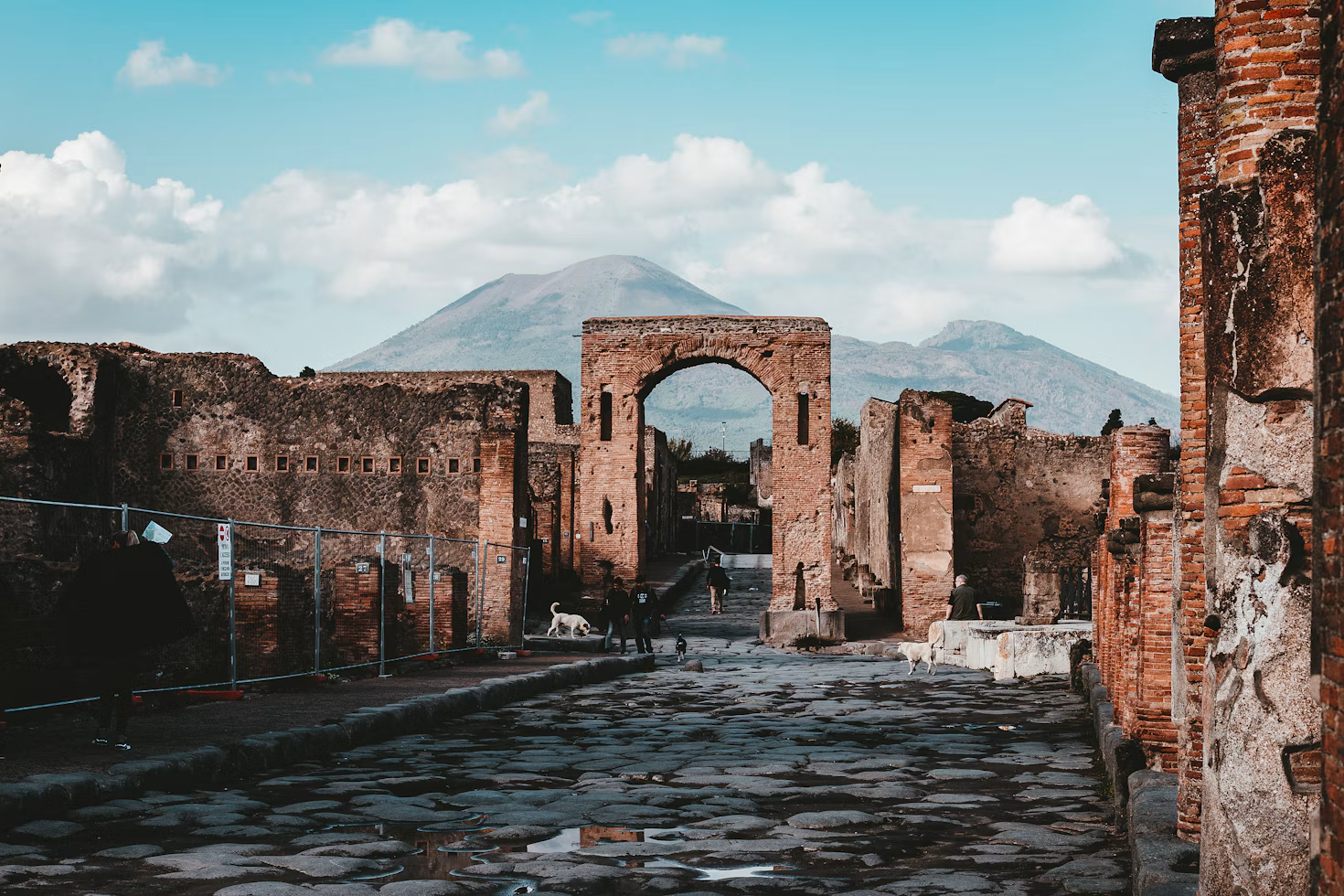
In 79 AD, in the Roman city of Pompeii, under the watchful eye of Mt. Vesuvius, disaster strikes. What followed is likely familiar to many readers. In one of the most notorious natural disasters in world history, the violent volcanic eruption of Mt. Vesuvius covered the cities of Pompeii, Herculaneum, and Stabiae in layers of ash and debris so thick that many residents were killed on the spot, suffocating while their last moments were preserved in statue-like detail under a layer of volcanic ash. It is estimated that the death toll of this single event was well into the thousands. A quick internet search brings back hundreds of resources, websites, studies, museum exhibits, etc. from around the globe on this particular disaster, perpetuating human interest and understanding of its impact. In the centuries since the infamous eruption of Mt. Vesuvius, humans have unfortunately experienced a great many similar disasters.
In recent decades, the world has seen a marked increase in frequency and intensity of large scale natural disasters. More troubling, is the finding that the regularity of “once-in-a-lifetime” events may be desensitizing rather than activating human interest. So much so that the August 2026 Nepal flooding which has, at current count (September 2026), killed over 1,000 people, disappeared 4,000 more, and has displaced an entire region, is no longer headline news after less than three weeks, at the time of writing. Further, the flooding and mudslides have continued beyond the original event, and have disappeared or killed another 24 people and displaced many more at current estimates. Similarly, other natural disasters happening around the world, such as the flooding in China or Minnesota, or the hurricanes in the Pacific Ocean, threatening Hawaii are occurring with such frequency and destructive power that before the news coverage about one ends, the next disaster has already started, creating a far more limited news cycle for each event.
This increase in devastating natural disasters is unusual to say the least. The constant flood (no pun intended) of information about these events through both news and social media has, as a result, become increasingly interesting to examine. The surge in frequency of these events has resulted in two interesting trends among media coverage of both the events themselves and the aftermath of them. First, these disasters now have a far more limited shelf-life in the news cycle, with many events getting about 1-3 weeks of coverage. This can be attributed in part due to a phenomenon known as ’crisis fatigue’. This is a more recently coined psychological phenomenon which has been attributed to the rise of social media coverage of global crises of all kinds. Its main characteristics are increasing desensitization and apathy and decreasing interest in the human toll of various global crises. Researchers on crisis fatigue believe it to be a result of the relentless and constant flood of information and violence that is available through social media outlets, in conjunction with similar aspects of traditional news media. Secondly, media coverage now comes in the form of sensationalistic videos and reporting about the death toll and destruction which never materializes into a discussion of relief efforts or the international efforts to help rebuild that we have seen with past disasters. This analysis will use media coverage of two large-scale natural disasters, the 2010 Haitian earthquake and the 2011 Japanese tsunami, as foundational case evidence for comparison to the recent Nepal flooding. Media coverage both reflects and frames human sentiment, making it a representative measure of public desensitization and interest in these events.
Background Information
To establish a common definition of some relevant concepts, we will look at the recent work of Rajshree et. al. In their attempt to define and discuss climate-related migration flows these authors looked at media coverage, international law documents, and international court proceedings. In their findings, they state that there are actually no universally agreed upon definitions for concepts like climate migration, climate refugees, or environmental migrants. However, for the purposes of this analysis we will use the composite definitions of these terms that are established in their work. For this analysis, the term “environmental migrants” will refer to people moving or being displaced due to climate, natural disasters, or other environmental factors. According to Rajshree et al, this is the most legally precise and universal definition. There has been a movement in the last several years to get the term “climate refugees,” or people being forcibly displaced from their place of origin due to climate-related factors, recognized in legal documentation on an international scale, however, at the current moment that has not come to fruition.
At the time of writing, two other important things have happened in the world that have further contributed to the public perception of climate-related disasters. First, social media has become a first-hand source of information about these events. Many people learn about them through social media coverage before the news media even gets around to reporting on them. As a result, many people are getting information about these events from people living through them and from live videos of the event happening in real time. Second, what we have increasingly seen is that countries like Nepal, which may not be large contributors to climate crises, are increasingly bearing the brunt of these large-scale disasters due to their geographical locations. The areas often hardest hit, such as mountainous or coastal regions are also often home to poorer groups of people who may already be struggling.
Historical examples of such intense events include things like the 2010 Haiti earthquake, the tsunami in Japan in 2011, or even the destruction of Pompeii by Mt. Vesuvius back in 79 AD. Both the Haitian earthquake and the Japanese tsunami had extensive media campaigns attached to them, some news coverage even appearing years later. The Haitian earthquake, for example, had new information and articles posted about it and the aftermath as recently as 2021. While obviously much has changed in the world at large since the destruction of Pompeii, more recent events such as Japan or Haiti can provide critical insight into just how much our perception of such disasters has changed in just the last 15 years.
Discussion
Having established the historical context related to the media and public reaction to natural disasters of a large scale, we now turn to our modern case study of the August 2026 flooding in Nepal to discuss changes in media reaction and public perception. On Wednesday, August 26th, 2026, an ice shelf from a large glacier broke loose resulting in a massive landslide and flood which, at current count killed or disappeared almost 5000 people. Unlike the disasters in Haiti, Japan, or even Pompeii, this bout of flooding was documented mostly on social media with videos being posted live as the event unfolded. Thousands of people, myself included, watched as buildings, people, and entire towns were swept away in under ten minutes. In the days that followed, multiple social media campaigns sprung up to assist people looking for news of missing loved ones, tourists and locals alike. Despite the initial wave of both social media and traditional news media campaigns and reporting, both sides of the media seem to have already moved on from the entire incident completely (written as of September 23rd 2026), which is deeply concerning.
As established above, this concerning trend is not something that has been the case for previous disasters of this caliber. In both the case of Haiti and Japan, the disaster was still being reported on regularly months and even years later, with articles being published about Japan as late as 2015 (4 years post-disaster) and Haiti having new articles published about it as recently as 2021 (11 years post-disaster). While we do not know for certain what the future news reporting on contemporary disasters will be, these historical events were not subject to the intense and short-lived social media campaigns that the recent Nepal flooding has experienced. Therefore, it will be potentially crucial to our understanding of the changing nature of perceptions around disasters to continue to track the newscycle of modern climate events over the coming years.
The recent flooding and landslides in Nepal are especially concerning as well because there have been multiple further incidents in the weeks since the original slide in late August, so the coverage of the original event has been completely overshadowed by the several other events in the area that have followed. If one searches the internet for “August flooding in Nepal,” the original event does not even appear among the results anymore. The only news reports are about the several landslides that have occurred since. There are also few articles discussing the aftermath of the original landslide and flood, with no updates being posted on the above-mentioned media campaigns looking for survivors and loved ones. The whole world watched a horrific, Pompeii-level event take place, live, on video, and has moved on to new things after less than three weeks. This can be partially attributed to the statistical increases in natural disasters of this size, instead of one event every few years it is now multiple events happening simultaneously around the world multiple times a year. It can be hard to keep each individual event in the news cycle for long when the same thing happens two days later halfway across the globe. So, part of it is certainly a numbers game. However, with the rise of social media and the shortening of human attention spans and increases in desensitization to violence in general, our collective interest in and understanding of the human impact of each of these events has significantly decreased as well.
Conclusion
Previous natural disasters, such as the Haitian earthquake or the Japanese earthquake and tsunami were marked by large media campaigns which mobilized organizations, governments, and people around the world to pool their resources to assist with rebuilding, search and rescue, and all the other pieces that are required after a disaster of that scale. While rising apathy towards large scale events makes logical and psychological sense in the face of the sheer number of crises we now face, a lack of interest has the potential to create even further harm from the simple fact that if people do not truly care about and follow the outcome of such events, no one will mobilize or donate resources. If no resources are gathered and distributed to post-disaster communities, infrastructure never gets rebuilt, people starve, and the next time disaster strikes, even more will die.
In conclusion, it has become obvious that these intense, large-scale natural disasters are increasing in frequency and destructive power at an alarming rate, and at the same time rates of crisis fatigue are rising drastically. The question then becomes, how do we move into a future where terrible events happen every day and no one has the energy to care?
References
Thompson, Grace. n.d. “The Devastating Pompeii Eruption: A Comprehensive Look into One of the World’s Most Notorious Natural Disasters.” Worldhistory.Org.Uk. Accessed October 5, 2026. https://www.worldhistory.org.uk/natural-disasters-pompeii-eruption.
Our World in Data. 2023. “Number of Recorded Natural Disaster Events.” Our World in Data. 2023. https://ourworldindata.org/grapher/number-of-natural-disaster-events.
Irwin, Zane, and Lynsey Chutel. 2026. “Death Toll in Nepal Floods Tops 1,300: What to Know.” The New York Times, August 26, 2026. https://www.nytimes.com/2026/08/26/world/asia/nepal-tibet-floods-wtk.html.
Uri Samet, BA, MPH. 2025. “Crisis Fatigue in the Digital Age: How Constant Exposure to Disasters Affects Public Attention and Engagement.” International Journal of Scientific Research in Computer Science, Engineering and Information Technology 11 (3): 1084–95. https://doi.org/10.32628/cseit25111681.
Das, Pankaj. 2026. “Video: Mountainside Vanishes in Seconds in Nepal Landslide as Heavy Rain Kills 24.” India Today. September 28, 2026. https://www.indiatoday.in/world/story/nepal-landslide-video-mountain-collapses-heavy-rain-kills-24-3004640-2026-09-28.
Guardian staff reporter. 2026. “Typhoon Narra: Record Flood Waters Submerge Homes and Force Mass Evacuations in China.” The Guardian. The Guardian. August 26, 2026. https://www.theguardian.com/world/2026/aug/26/typhoon-narra-floods-evacuations-china.
Krueger, Andrew. 2026. “Torrential Rain Causes Flooding, Mudslides in Southern Minnesota.” MPR News. September 19, 2026. https://www.mprnews.org/story/2026/09/19/torrential-rain-flooding-mudslides-southern-minnesota.
Munis, Jacqueline. 2026. “The Pacific Is a Mess of Hurricanes.” The Atlantic. September 26, 2026. https://www.theatlantic.com/science/2026/09/pacific-hurricanes/688802/.
Scharrer, Erica. 2008. “Media Exposure and Sensitivity to Violence in News Reports: Evidence of Desensitization?.” Journalism & Mass Communication Quarterly 85 (2): 291–310. https://doi.org/10.1177/107769900808500205.
None Rajshree, Chandrika Mehta, and Suman Luhach. 2025. “Displaced by Climate Change: Navigating Legal Framework for ‘Climate Refugees’ in International Environmental Law.” India Quarterly A Journal of International Affairs, January. https://doi.org/10.1177/09749284241307928.
Berchin, Issa Ibrahim, Isabela Blasi Valduga, Jéssica Garcia, and José Baltazar Salgueirinho Osório de Andrade Guerra. 2017. “Climate Change and Forced Migrations: An Effort towards Recognizing Climate Refugees.” Geoforum 84 (84): 147–50. https://doi.org/10.1016/j.geoforum.2017.06.022.
Althor, G., Watson, J. E. M., & Fuller, R. A. (2016). Global mismatch between greenhouse gas emissions and the burden of climate change. Scientific Reports, 6(1). https://doi.org/10.1038/srep20281
Chaudhury, R. (2025, November 11). Melting glaciers, moving people: Nepal’s climate-induced migration. OBSERVER RESEARCH FOUNDATION ( ORF ). Orfonline.Org. https://www.orfonline.org/expert-speak/melting-glaciers-moving-people-nepal-s-climate-induced-migration.
Koshimura, Shunichi, and Nobuo Shuto. 2015. “Response to the 2011 Great East Japan Earthquake and Tsunami Disaster.” Philosophical Transactions of the Royal Society A: Mathematical, Physical and Engineering Sciences 373 (2053). https://royalsocietypublishing.org/doi/10.1098/rsta.2014.0373.
Miami Herald Archives. 2021. “Looking Back at the Deadly 2010 Earthquake in Haiti. How Tragedy Unfolded in First Days.” Miami Herald. August 14, 2021. https://www.miamiherald.com/news/nation-world/world/americas/haiti/article253492494.html.