
By Lakshya Rohilla, Research Analyst
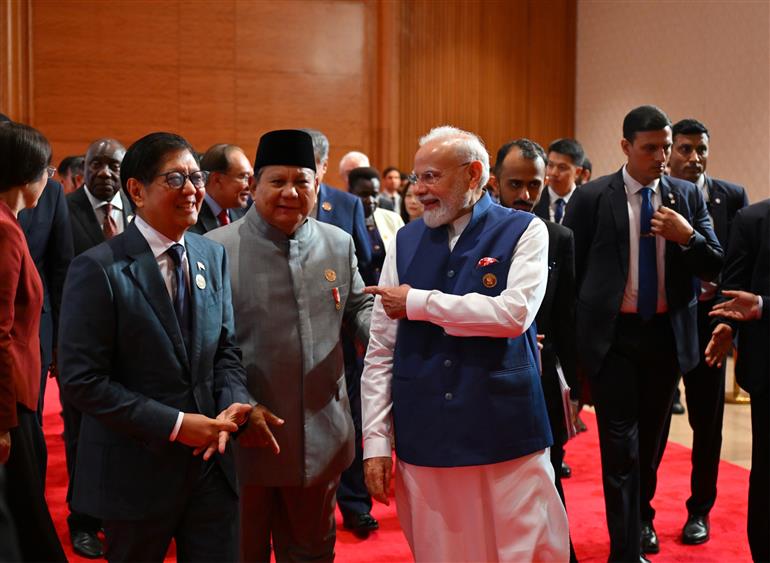
The 2026 BRICS summit on September 12-13th in New Delhi brought together a diverse group of middle and emerging powers during a particularly volatile and consequential moment for the increasingly fragmented multipolar global order. Amid ongoing conflict in West Asia, supply chain pressures due to tariffs, and growing demands for greater representation of the Global South, the summit presented India with an opportunity to demonstrate its long-standing approach of strategic autonomy and multi-alignment. New Delhi demonstrated its ability to maintain simultaneous relationships with competing powers throughout the summit, from securing consensus on cross-border terrorism and regional stability to hosting Iranian President Dr. Masoud Pezeshkian, Russian President Vladimir Putin, and Chinese President Xi Jinping. Moreover, this summit also illustrated how New Delhi is leveraging relationships across competing powers while simultaneously positioning itself as a consequential actor within the multipolar global order.
Possibly the summit’s clearest diplomatic victory for New Delhi was the joint declaration unequivocally condemning the April 22nd Pahalgam terrorist attack in Jammu and Kashmir, which killed 26 innocent civilians. Moreover, the member nations reaffirmed the bloc’s commitment to combating terrorism in all its forms. More significantly for India, the declaration explicitly identifies the cross-border movement of terrorists, terrorism financing, and safe havens as threats, while also expressing zero tolerance for terrorism and the rejection of double standards in countering terrorism. Furthermore, the declaration states that governments hold the primary responsibility in combating terrorism, while calling for increased collaboration through counterterrorism working groups. For New Delhi, securing consensus on such language represents a crucial diplomatic victory. It represents a culmination of India’s efforts to internationalize the threats of cross-border terrorism via multiparty parliamentary delegations in the aftermath of this attack and Operation Sindoor. The inclusion of such language grants multilateral legitimacy to India’s broader international counterterrorism doctrine. More importantly, securing such an agreement among an increasingly diverse BRICS membership demonstrates New Delhi’s ability to translate its core national security priorities into multilateral consensus, a testament to its diplomatic statecraft.
Beyond advancing New Delhi’s immediate national security concerns, the summit also demonstrated India’s growing ability to facilitate consensus among rival regional powers. This was particularly evident among the Gulf nations, where India managed to secure consensus on the joint declaration acknowledging the urge to protect civilians and civilian infrastructure, while actively engaging in diplomacy to ensure lasting peace and cessation of all hostilities. An investigation by The Indian Express revealed a grueling 100 hours of negotiation by the Ministry of External Affairs, which included diplomatic engagements by the Indian government at the highest levels, along with mediation from Beijing and Moscow to persuade Tehran and Abu Dhabi to agree to a joint consensus. The significance extended beyond the declaration itself. On the sidelines of the summit, Abu Dhabi Crown Prince Sheikh Khalid bin Mohammed bin Zayed Al Nahyan met Iranian President Masoud Pezeshkian, opening an important diplomatic channel for two rival powers with diverging economic and security interests. For New Delhi, facilitating such consensus demonstrates its ability to maintain relationships across regional divides and mediate dialogue.
India’s engagement with Iran on the sidelines of the BRICS summit also reflected another key dimension of New Delhi’s multi-alignment strategy: its ability to expand bilateral strategic partnerships despite growing external pressures surrounding its partners. This was the second meeting between Prime Minister Narendra Modi and President Pezeshkian in less than two weeks, and the latter’s first official visit to India. The symbolism surrounding this visit was particularly significant given the mounting economic pressures on crucial trade routes and key commodities such as crude oil. Additionally, the talks emphasized deepening cooperation in trade, technology, and other key areas, highlighting New Delhi’s desire to expand strategic ties. Notably, this meeting came just days before Congress gave final approval to the Lindsey Graham Sanctioning Russia and Iran Act (subsequently signed into law by President Trump on September 18th). The act allows the president to impose up to 100% tariffs on goods from the largest purchasers of Russian oil and gas, and extends existing US sanctions on Iran, threatening New Delhi’s strategic interests given its heavy imports of crude oil from the Kremlin. While this is an evolving situation, and the president has since issued a 60-day waiver suspending these tariffs, such legislation and rhetoric from the White House is a warning sign that the Modi government must take seriously. Against this backdrop, for India, continuing with Iran (especially given the opposition from Washington) illustrates its commitment to pursuing its own interests without being pressured to compromise on its national security priorities. Given India’s growing economic, military, and diplomatic capabilities over the last fifteen years, New Delhi is now better positioned to withstand external pressure while pursuing its strategic interests. Its expanding economic and defence capabilities and increasing strategic relevance in the Indo-Pacific and West Asia have increased the costs for Washington in its attempt to isolate New Delhi. Consequently, New Delhi’s continued engagement with Tehran does not merely reflect a greater willingness to resist American pressure but also a confidence that its current geopolitical status provides leverage to pursue an independent foreign policy.
The significance of this summit was further underscored by the presence of Chinese President Xi Jinping, on his first visit to India in seven years. Modi and Xi held a bilateral meeting on the sidelines of the summit, where Prime Minister Modi emphasized the importance of the three mutuals (mutual respect, mutual sensitivity, and mutual interest). The two leaders also acknowledged the improved bilateral relations, expressed a commitment to resolving border-related issues, and called for collaboration on regional and global issues. While there wasn’t any tangible progress on strategic initiatives, Xi’s mere presence on Indian soil spoke volumes, especially given the Chinese president’s reduced foreign travel over the last few years. Xi’s return to India at a time of heightened fractures in the global economic system signals the necessity of greater cooperation and collaboration between New Delhi and Beijing. Furthermore, the current polycrisis fueled by Washington’s tariffs, war-driven supply chain shocks, and increasing geopolitical fragmentation highlights the global relevance of BRICS as nations develop alternative trading systems and supply chains.
However, favorable optics and diplomatic consensus should not be conflated with tangible outcomes. While New Delhi received favorable language, joint initiatives, and consensus through a comprehensive joint declaration, the summit’s successes are largely symbolic. The larger challenge for BRICS remains translating ambitious declarations into concrete outcomes. While the New Delhi summit may have demonstrated India’s considerable diplomatic acumen, whether this influence can generate durable institutional outcomes remains uncertain. A deeper structural challenge lies within the bloc itself: the ambitions of China. Beijing views the group as an alternative, anti-Western bloc that it hopes to lead, while other nations like India view it as a grouping of like-minded Global South nations advocating for expanding representation of developing economies within existing global institutional frameworks. Thus, a BRICS dominated by Beijing may not be able to facilitate consensus commensurate with the collective vision of the bloc, leading to doubts over the bloc’s long-term viability.
Moreover, this summit raises questions regarding the long-term sustainability of India’s multi-aligned foreign policy approach. While this strategy is currently yielding strategic flexibility to maintain substantive relationships with rival nations without compromising on its own interests, it may become increasingly difficult as great power competition intensifies and the globe becomes more polarized. While New Delhi may not be forced to choose a specific camp, the costs of avoiding such choices might progressively increase. Ultimately, the long-term effectiveness of multi-alignment will therefore depend on whether New Delhi can continue to maintain its strategic relationships without compromising on its strategic autonomy or its national interests, while at the same time enabling BRICS to pursue tangible initiatives without turning it into a Chinese-led anti-Western alliance.