Briefing by Anonymous Researcher with Tessera Institute
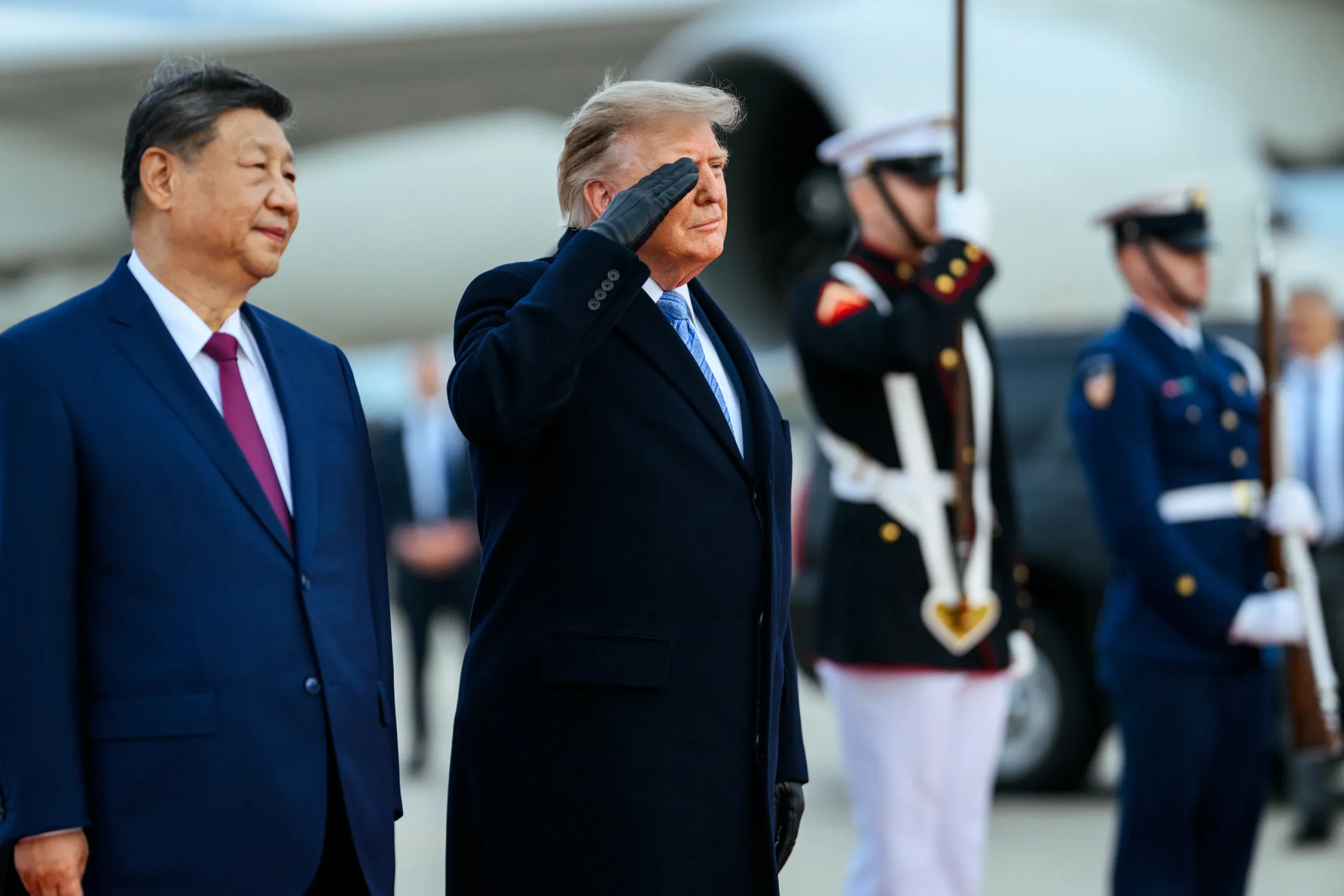
Just over four months after U.S. President Donald Trump’s state visit to Beijing, Chinese President Xi Jinping traveled to Washington on September 23, 2026, for his first U.S. state visit in 11 years. While Canadian observers and media have offered their own assessments of the visit and its implications for Canada, Chinese analysts’ perspectives offer a complementary lens for examining prospects for greater stability in China-U.S. relations and what this could mean for Ottawa’s foreign policy choices.
Chinese media coverage of the summit repeatedly highlighted Trump’s unusual planeside welcome at Joint Base Andrews and the Chinese elements incorporated into the state-dinner menu. More broadly, the meeting was portrayed as a continuation of what Beijing called “constructive strategic stability,” a new formulation for characterizing bilateral relations that China introduced during Trump’s visit in May. At the September summit, China’s Ministry of Foreign Affairs (MFA) further elaborated on the concept, adding the phrase “on the basis of respect, fairness, and reciprocity” to its statement on the meeting. Comments from two established Chinese scholars Wu Xinbo and Su Xiaohui, provide insight into how their assessments of the relationship differed between May and September.
Wu Xinbo and Su Xiaohui stood out as two of the few scholars interviewed about both state visits, offering a valuable opportunity to compare commentary on the two summits.
Wu Xinbo, Dean of Fudan University’s Institute of International Studies and Director of its Center for American Studies, is a prominent scholar of China-U.S. relations and American foreign policy. Fudan’s Center for American Studies is one of China’s leading institutions specializing in U.S. affairs and maintains close ties with China’s foreign-policy establishment, including the Ministry of Foreign Affairs. Wu himself has served on the MFA’s Foreign Policy Advisory Group. His May interview appeared in Zhengshier, a well-known political-affairs platform produced by The Beijing News, while his September interview was with Caijing, an influential magazine known for its coverage of economic and policy affairs.
Su Xiaohui, Deputy Director of the Institute of American Studies at the China Institute of International Studies (CIIS), has an even closer institutional connection to China’s foreign policy apparatus: CIIS is a research institution directly affiliated with the MFA and a designated national high-end think tank. Su was interviewed by China.com in May, a major Chinese online media platform that frequently uses experts to interpret major domestic and international developments, and by Changjiang News in September, an international-affairs commentary program produced by Hubei Media Group.
These interviews offer insight into establishment-linked public commentary rather than a representative picture of Chinese scholarly opinion or direct evidence of internal policymaking.
In May, Wu’s and Su’s assessments of the relationship were broadly positive, though they differed in emphasis. When China’s MFA first introduced the concept of “constructive strategic stability,” both scholars focused on its potential to provide a more stable and constructive framework for the relationship. Wu described the stability as not temporary, but strategic and sustainable, pointing to the possibility of a lasting improvement in bilateral relations under the new framework. Su, meanwhile, pointed out that the relationship remained difficult, but the two sides had incentives to prevent further deterioration, manage competition, and gradually improve cooperation. Her comments suggested that stability would depend on continued communication and gradual progress rather than the resolution of underlying differences.
By September, Wu’s assessment had become more measured, with greater emphasis on the practical challenges of sustaining strategic stability. He acknowledged that competition would continue and could sometimes produce confrontation, framing strategic stability as a way to manage rather than eliminate those tensions. Su’s assessment, by contrast, remained broadly consistent with her May position. She continued to emphasize dialogue, practical cooperation and gradual progress, while recognizing the complexity of China-U.S. economic and trade relations and stressing that not all problems could be resolved at once. Taken together, the two interviews suggest less a broad shift from optimism to pragmatism than a growing emphasis on the practical work required to sustain a more stable relationship. This emphasis was also reflected in the MFA’s official formulation, in which the addition of “respect, fairness, and reciprocity” suggests that strategic stability is being framed less as a resolution of China-U.S. differences than as a framework for managing them.
The fact that the White House’s September readout also used the formulation “on the basis of respect, fairness, and reciprocity” suggests some convergence between Beijing and Washington on how the relationship should be managed, even as significant differences remain. For Canada, this development may matter less for removing strategic constraints than for greater predictability within them. A more stable China-U.S. relationship could give Ottawa additional room for maneuver in managing its relations with both powers, particularly when pursuing Canadian economic and diplomatic interests that do not always align neatly with Washington’s priorities. It could also create more favorable conditions for Canada to engage Beijing on areas of mutual interest while continuing to address its security concerns and maintain close ties with the United States. Such stability would not eliminate the pressures Canada faces from strategic competition, but it could make those pressures easier to navigate and allow Ottawa to pursue its interests more deliberately.
Sources
- Sina Finance, “Exclusive Interview with Wu Xinbo: How Can China and the United States Move Toward a Constructive Relationship of Strategic Stability?” September 28, 2026.
- Changjiang News, “Su Xiaohui: To Implement the Leaders’ Consensus, China and the United States Need to Move Toward Each Other,” September 2026.
- ZhengShier, “Exclusive Interview with Wu Xinbo: Discussing Trump’s Visit to China,” May 16, 2026.
- China.com, “Trump’s Visit to China Opens a New Positioning for China-U.S. Relations; Head-of-State Diplomacy Builds Momentum for a Major Year,” May 17, 2026.